

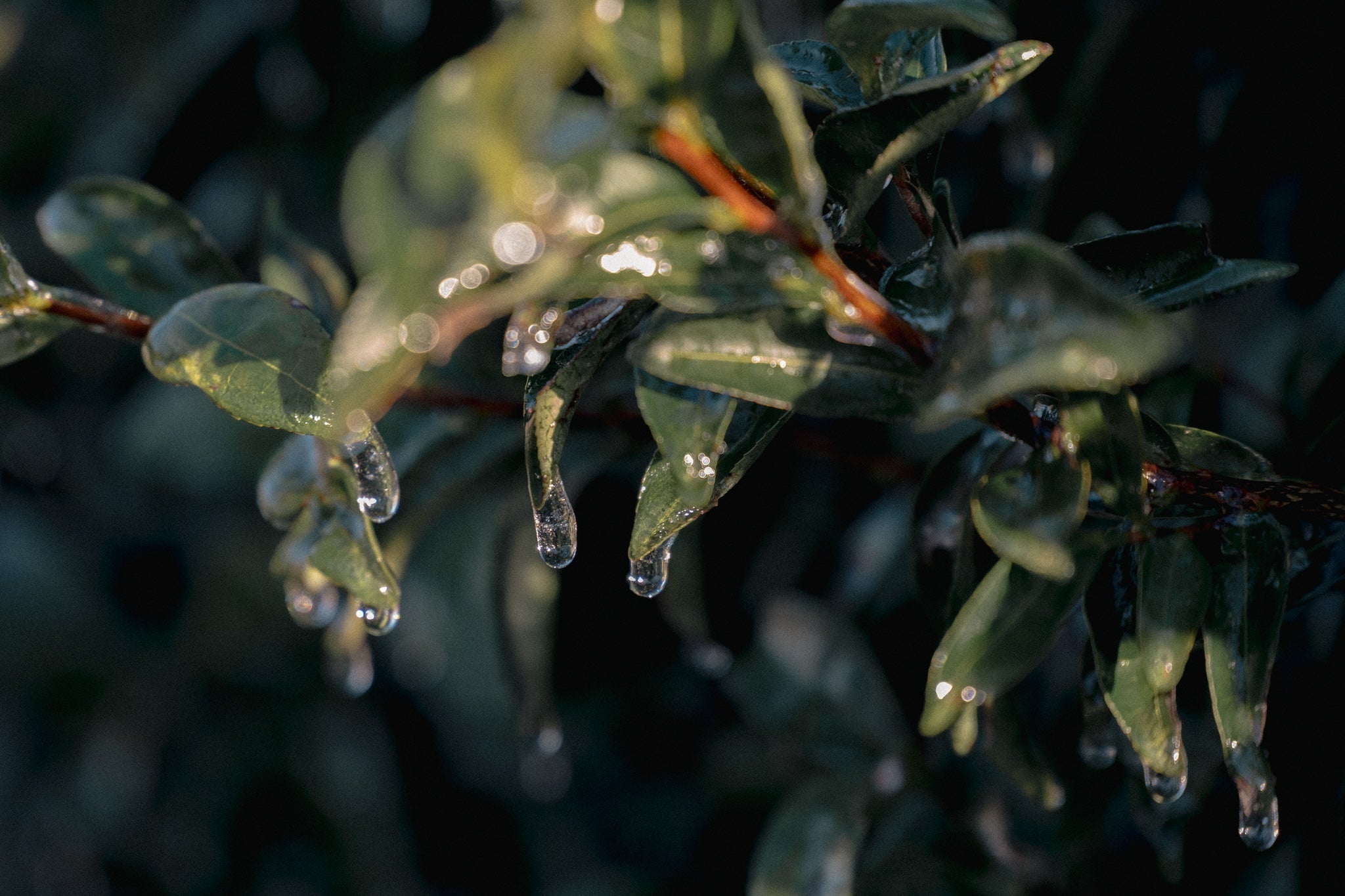
In the new-tea season for Kirishima tea, around the time of the eighty-eighth night, growers watch the morning temperature with anxious eyes. The soft, freshly grown new shoots can suffer serious damage from a single night's frost. Here we introduce the techniques for protecting tea fields from frost, as general knowledge.
Why Are New Shoots Vulnerable to Frost?
Frost damage occurs when the temperature falls, the water inside plant tissue freezes, and the cells rupture. Spring's freshly grown shoots contain a great deal of water and have low cold tolerance, so when radiative cooling at dawn drops the temperature below freezing, they can be ruined in a single night. Because the precious first flush takes the hardest blow, frost protection is one of the great challenges of tea growing.
Anti-Frost Fans: Bringing Down Warmer Air From Above
A common sight across many tea regions is a fan mounted atop a tall pole standing in the fields. This is an anti-frost fan. On clear, windless nights, the air separates into a cold layer near the ground and a comparatively warmer layer several meters up. The anti-frost fan pushes that warmer air back down, raising the temperature around the tea shoots by a few degrees to prevent frost.
Overhead Sprinkling: Harnessing the Heat Released as Water Freezes
Another technique, which at first seems contradictory, is overhead sprinkling. On nights when frost threatens, water is sprayed continuously onto the new shoots, wrapping them in ice. Why does freezing them protect them? The key lies in latent heat.
- When water changes from liquid to solid (ice), it releases a quantity of heat called latent heat
- As long as water keeps freezing on the surface of the shoot, this latent heat holds the shoot's temperature near zero degrees
- Even when the surrounding air is below freezing, the shoot itself avoids the lethal low temperatures
In other words, covering the shoots in ice actually prevents them from cooling any further—an ingenious method that harnesses a natural principle of physics.
Highland Regions Like Kirishima and Frost
Highland regions of elevation like Kirishima have a large day-night temperature range. This is what gives the tea its deep umami and aroma, but it also comes hand in hand with the risk of frost from radiative cooling in early spring. Which frost-protection measures are combined depends on the terrain of the field, water availability, and the weather of the year—and it varies from region to region and grower to grower. In every case, behind a cup of spring tea lie unseen efforts to protect the new shoots through frosty nights.
The Land of Kirishima and Its Tea
You can read about the Kirishima landscape where our tea fields lie in What Is Kirishima Tea, and about the work of growing that tea in The Making of Tea.
Frequently Asked Questions
Q. In which season does frost become a problem?
Above all in early spring when the new shoots emerge; the culprit is the so-called late frost. The risk is highest on clear, windless early mornings.
Q. Doesn't spraying water and freezing the tea harm it?
The mechanism is that the latent heat released as water freezes keeps the shoot near zero degrees. It is essential to keep spraying continuously; stopping partway can actually cause damage, so the method demands skill and experience.

Share:
Kagoshima Airport and Imamura Tea Plantation jointly create a boarding pass-shaped organic sencha tea bag — on sale July 16
The Mythology of Kirishima and Tea: Kirishima Tea Grown on the Land of the Heavenly Descent