

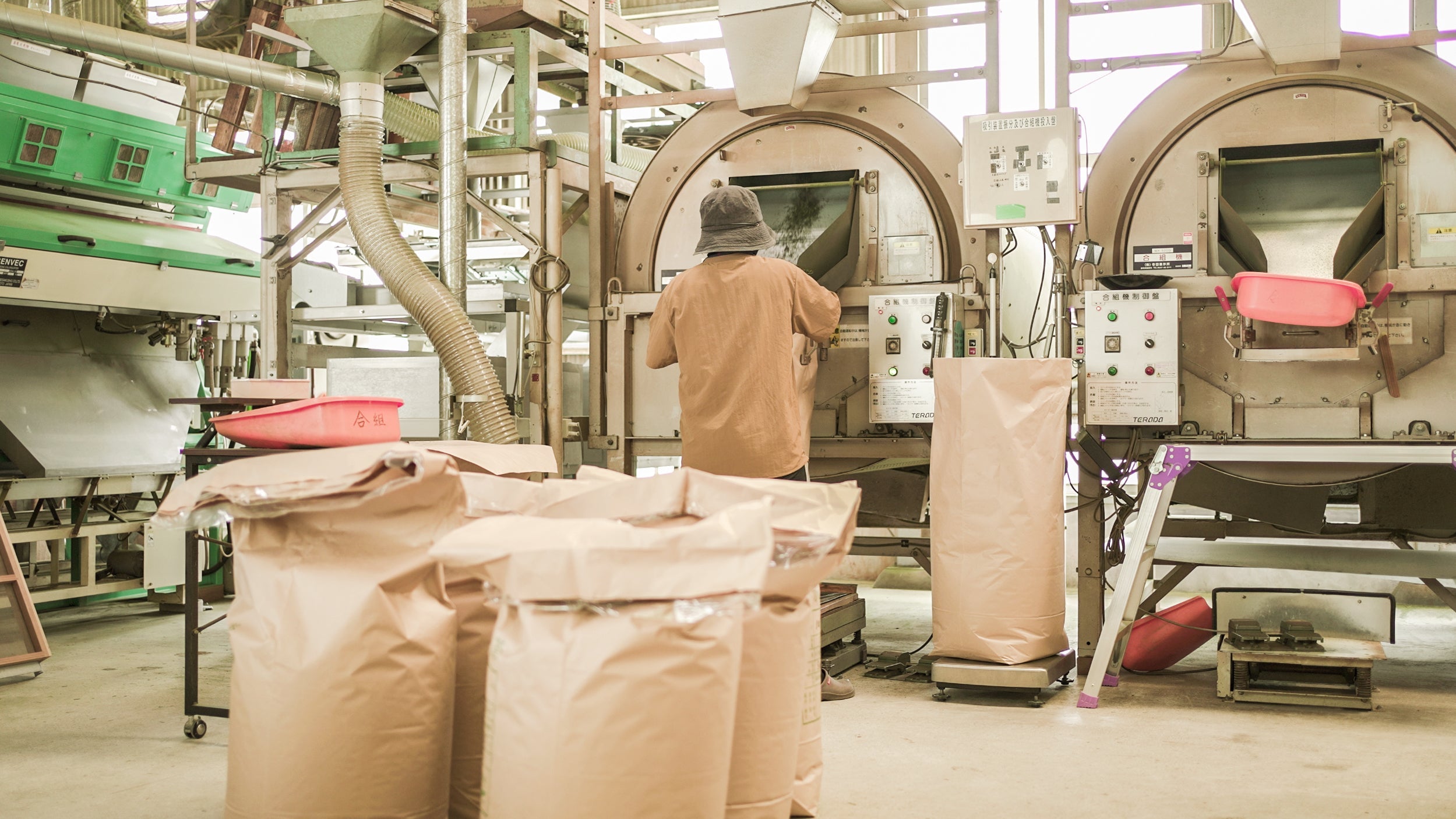
Near the end of the Kirishima tea-making process comes a step called gougumi. The word may be unfamiliar, but in a phrase, it is the blending of tea. Leaves of different cultivars and steaming levels are combined and composed into a single taste. Of all the stages of tea making, we consider gougumi the one that asks the most of a craftsman's experience and senses.
What Is Gougumi?
Even tea from the same field varies slightly with the day it was picked, the weather, and the degree of steaming. And yet we want to deliver the same familiar taste to our customers, cup after cup. Gougumi is what bridges that gap. By reading and combining multiple lots of leaf, it creates a depth and harmony of flavor that no single leaf could achieve on its own.
Judging with the Five Senses
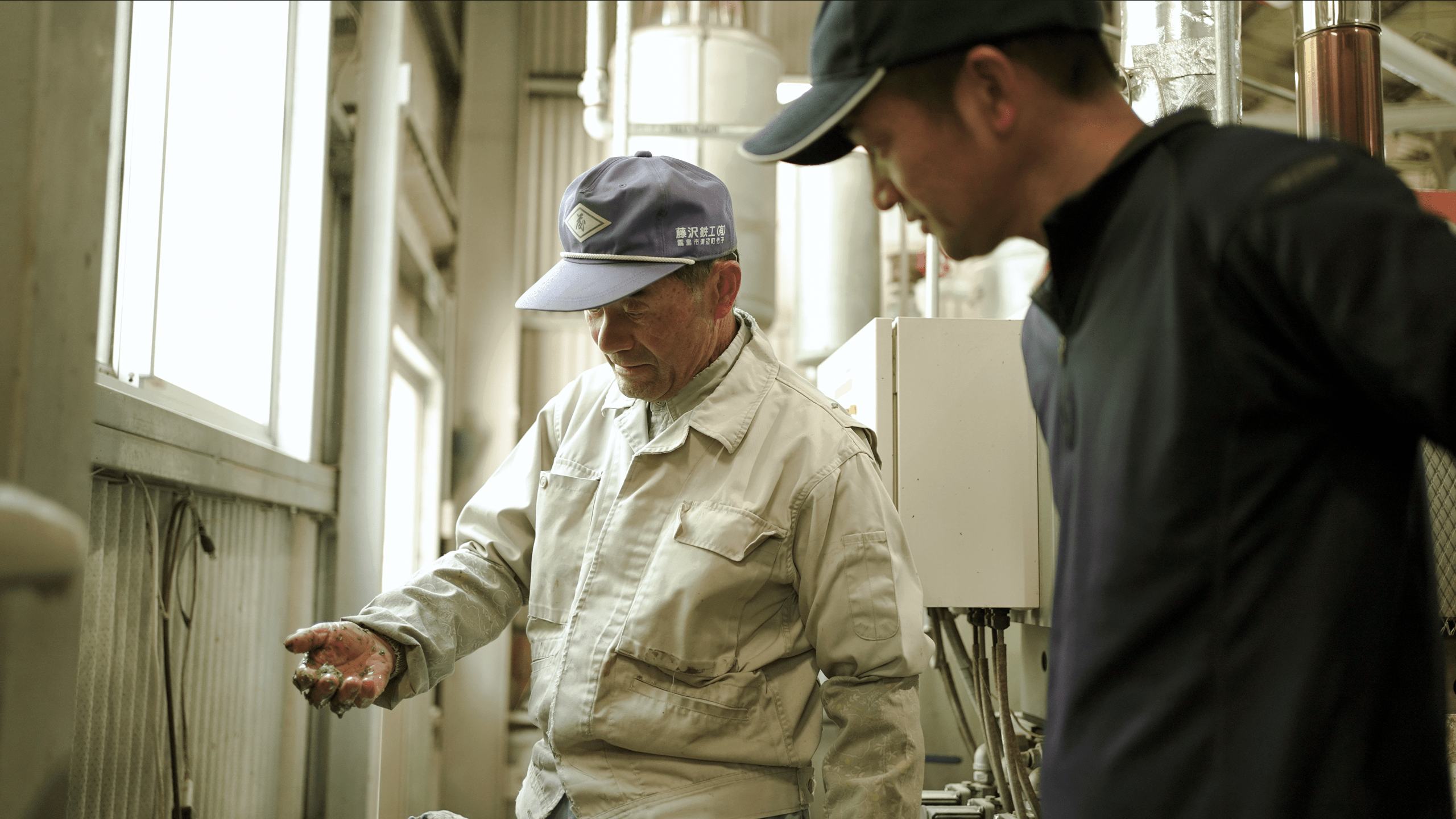
In gougumi, the tea master examines the leaves by eye, breathes in their aroma, brews and tastes them, and feels them by hand. The shape and sheen of the leaf, the clarity of the liquor, how the aroma rises, the body and the lingering finish — qualities no number can capture are weighed with the senses, to judge which leaves, in which proportions, will bring out the best in one another. A fragrant leaf layered over a full-bodied one; leaves of different steaming levels balancing smoothness against depth. Gougumi is not addition but multiplication.
A Finish Built on Every Step Before It
Gougumi only becomes possible once every preceding step is in order. Steaming sets the foundation of the taste; the rolling stages shape the leaf; sifting and optical color sorting refine the lots. Only when leaves of distinct character stand ready does combining them gain its meaning. The whole process is introduced on The Making of Tea — we hope you will read it alongside this article.
For a Cup That Never Wavers
Working with nature, no two lots of tea are ever identical. Even so, the cup in your hands should always taste the way you remember it — and it is gougumi that quietly upholds that expectation. The individual characters that Kirishima's soil and climate give each leaf are gathered, at the last, into a single taste. You can judge the result for yourself in our Kirishima tea lineup, and read more about the tea itself in “What Is Kirishima Tea.”
Frequently Asked Questions
Q. Isn't unblended tea superior?
A. Single-field, single-cultivar teas have the charm of each year's individuality; blended teas have the charm of steady harmony. Neither stands above the other.
Q. Can't machines do the blending?
A. Machines handle the mixing itself, but the judgment of which leaves to combine, and how, still belongs to the human senses.
Share:
The Final Firing: Where Aroma Is Born at 80–130°C, Explained by a Kirishima Tea Farm
Not a Single Leaf Wasted: Circular Farming in Our Kirishima Tea Fields