

Why was an air base built here?


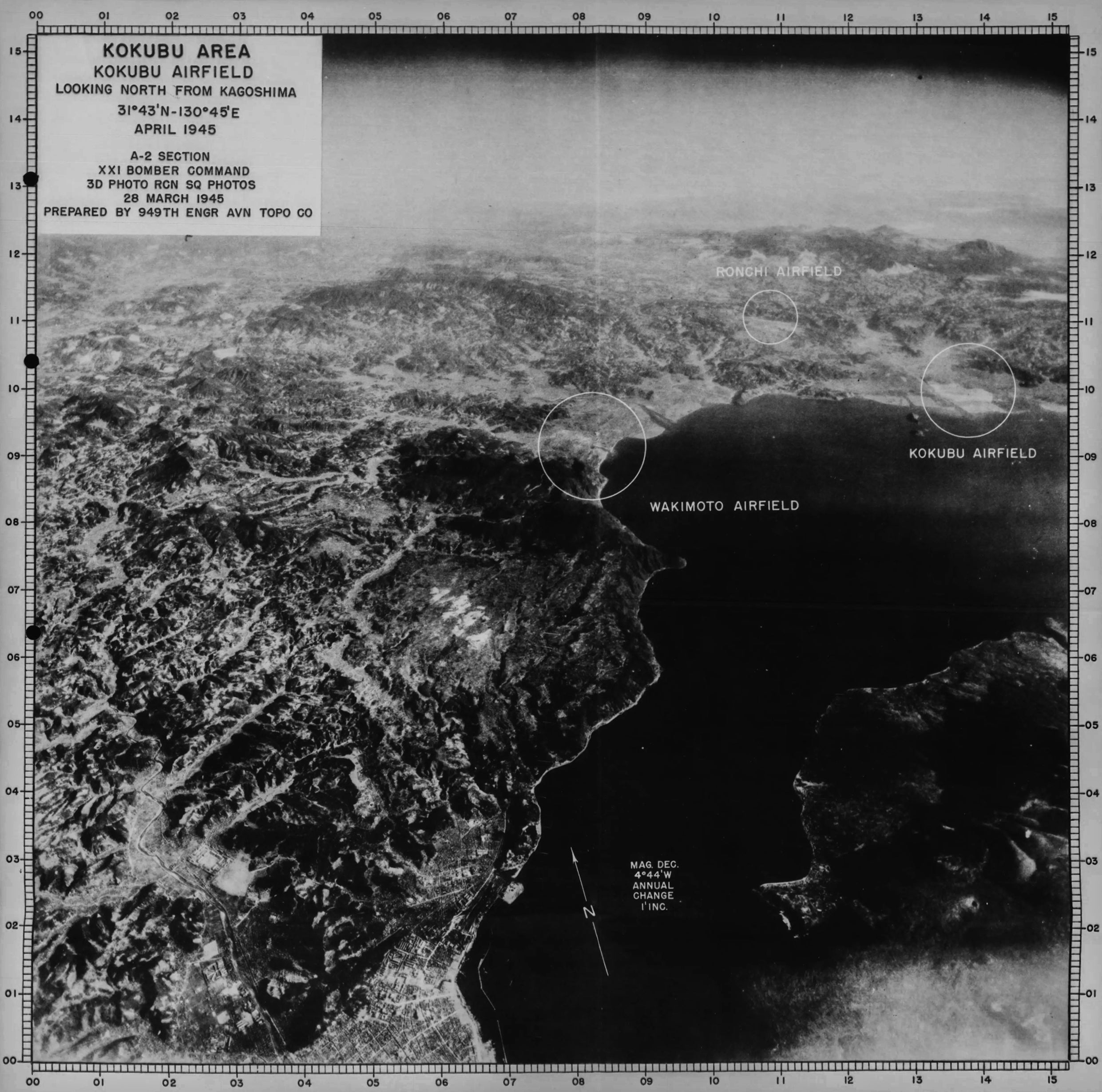

RONCHI AIRFIELD
Aerial reconnaissance photograph of "RONCHI AIRFIELD" (Kokubu No. 2 Naval Air Base), Kagoshima. Taken 1 Jan 1945 by a USAAF F-13A, Sortie 5ME-1; annotated by JICPOA (print ref. 50203-46). Original negative: U.S. National Archives, RG 373. Public domain.
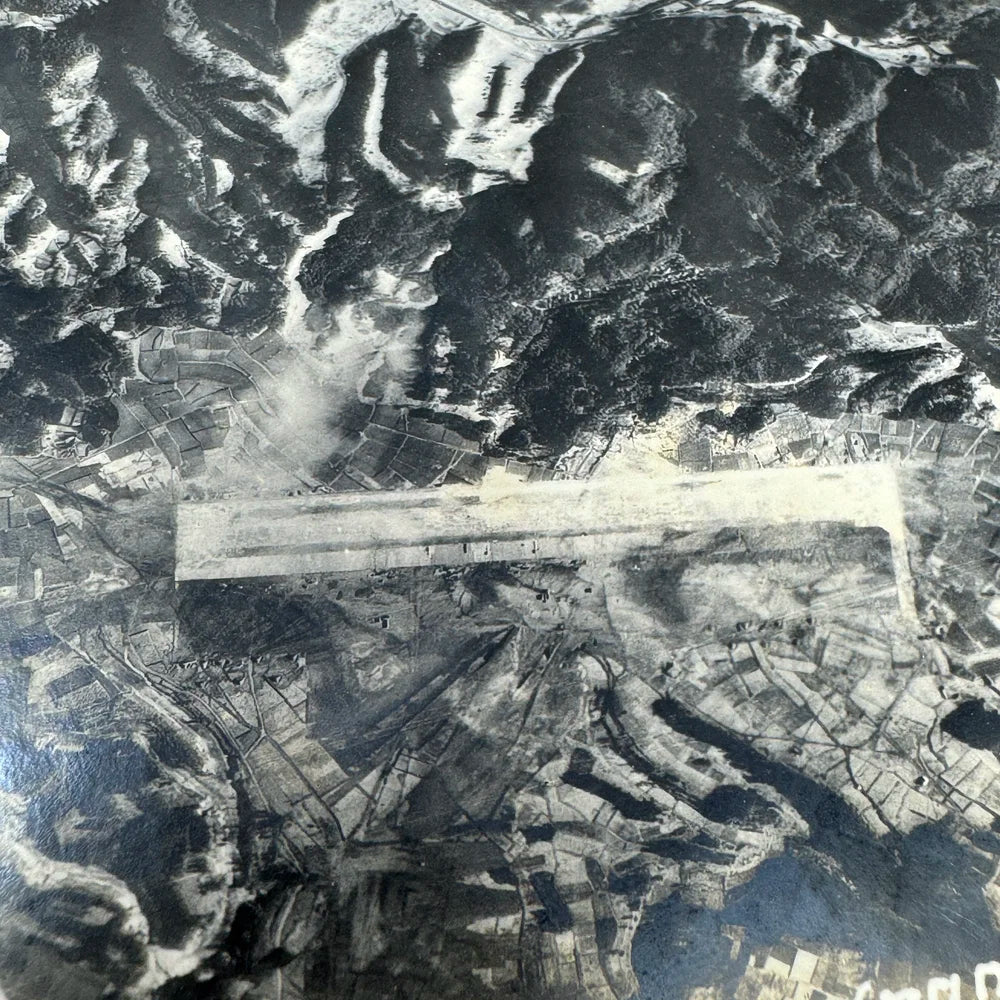
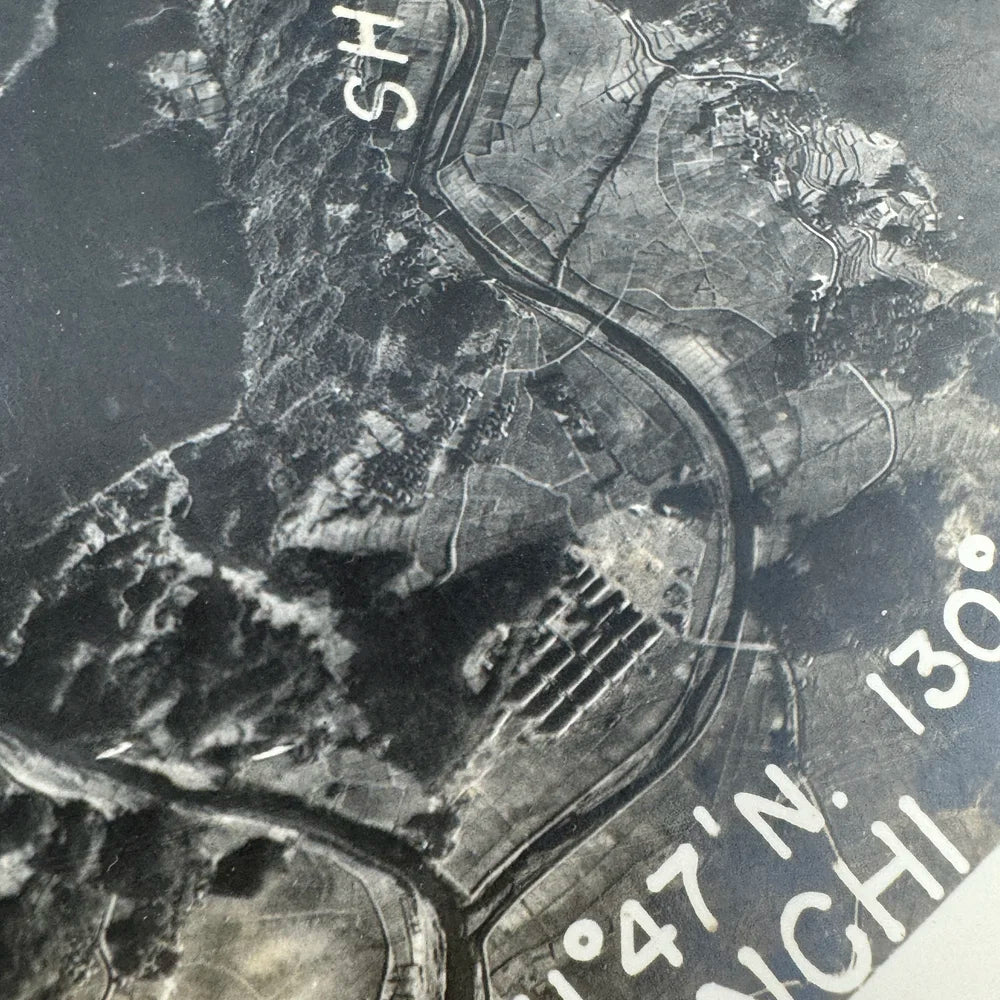
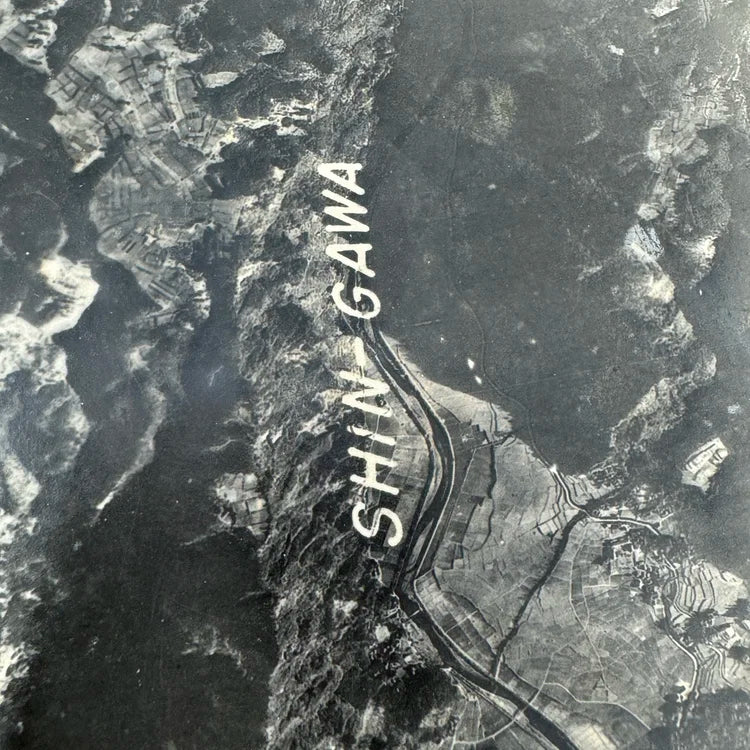
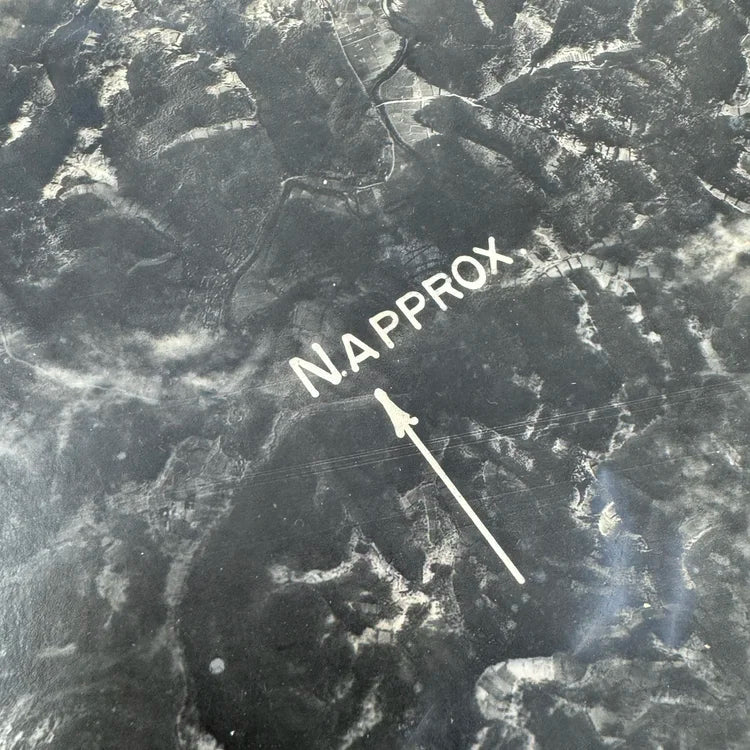
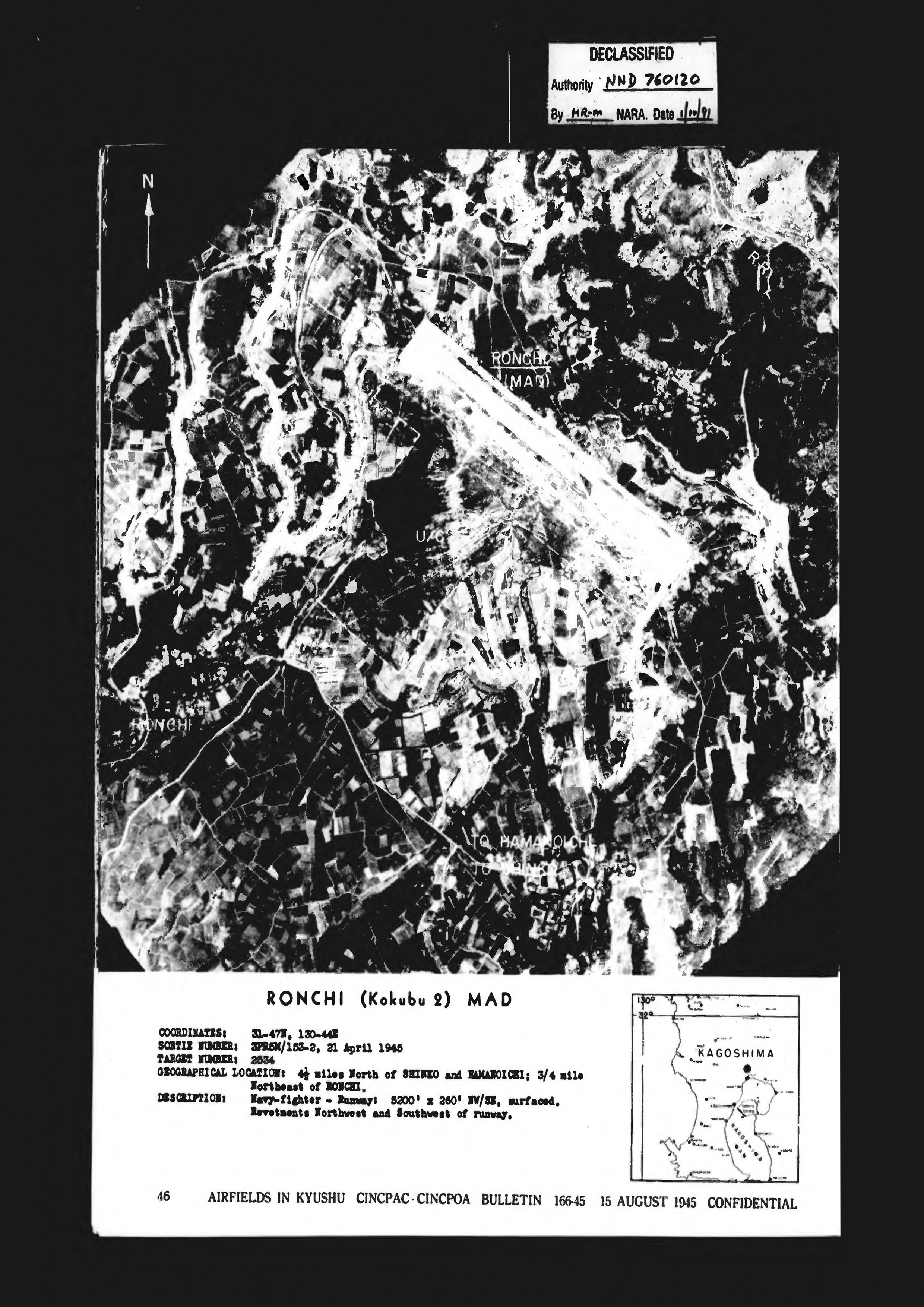
Part of the airfield at Jūsantsukabaru was completed by the end of 1944. With this, the existing base was renamed Kokubu No. 1 Air Base, and the new one at Jūsantsukabaru became Kokubu No. 2 Air Base. In U.S. military records of the period, this airfield appears under the name “RONCHI.”
Labor for the construction site at Jūsantsukabaru was drawn largely from the Mizobe area, and from across the prefecture — Kagoshima City, Ibusuki, and beyond. Those who came from farther away lodged at Hinatayama, setting out each day in the half-light before dawn and walking the long uphill road to the site. There was no heavy machinery; the base was built entirely by hand.
On the high ground of Jūsantsukabaru, where water was scarce, securing it was a constant problem. People are said to have carried several 1.8-litre bottles on their backs to the river at Hazama in Hayato-chō and back, about four round trips a day.


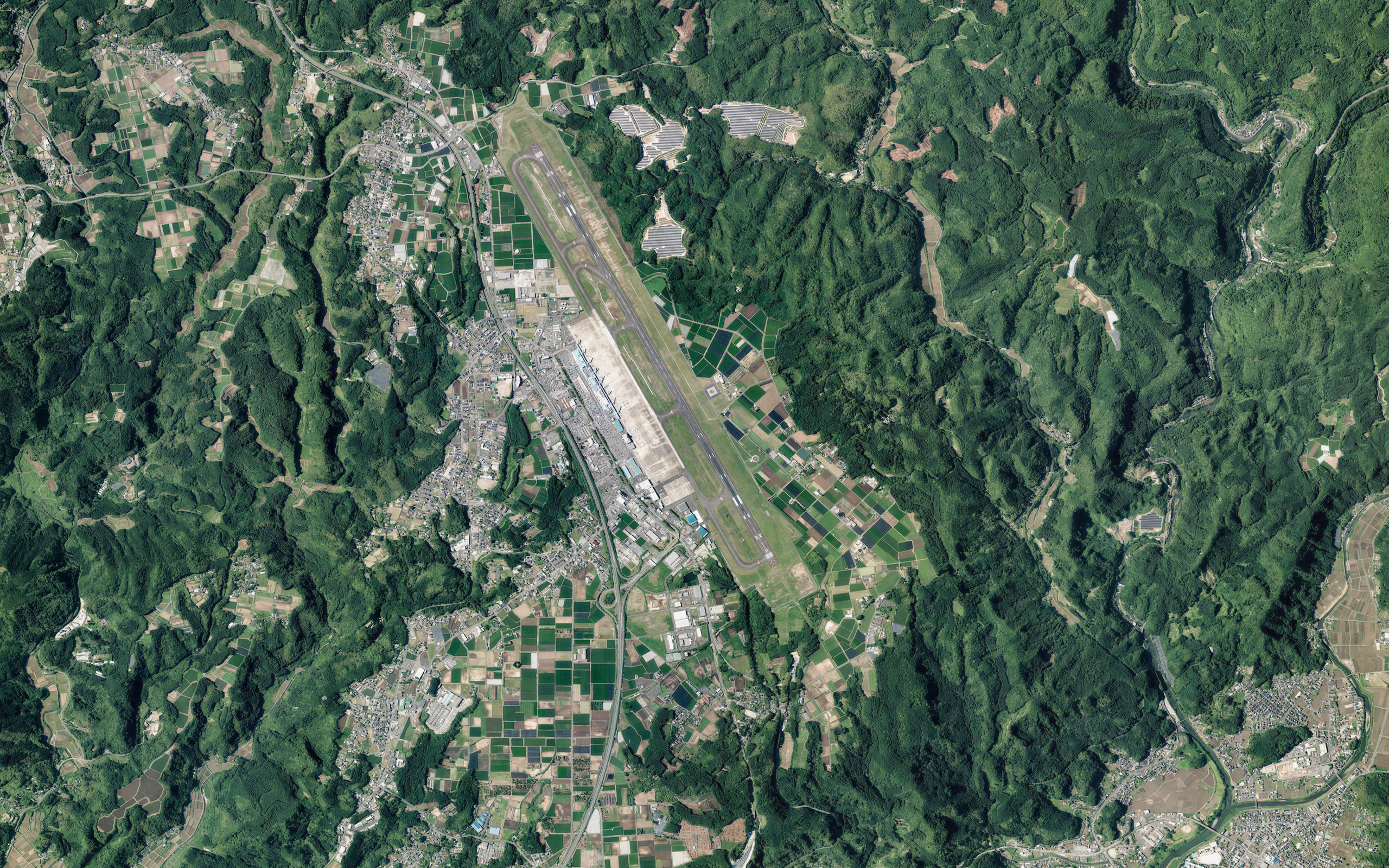
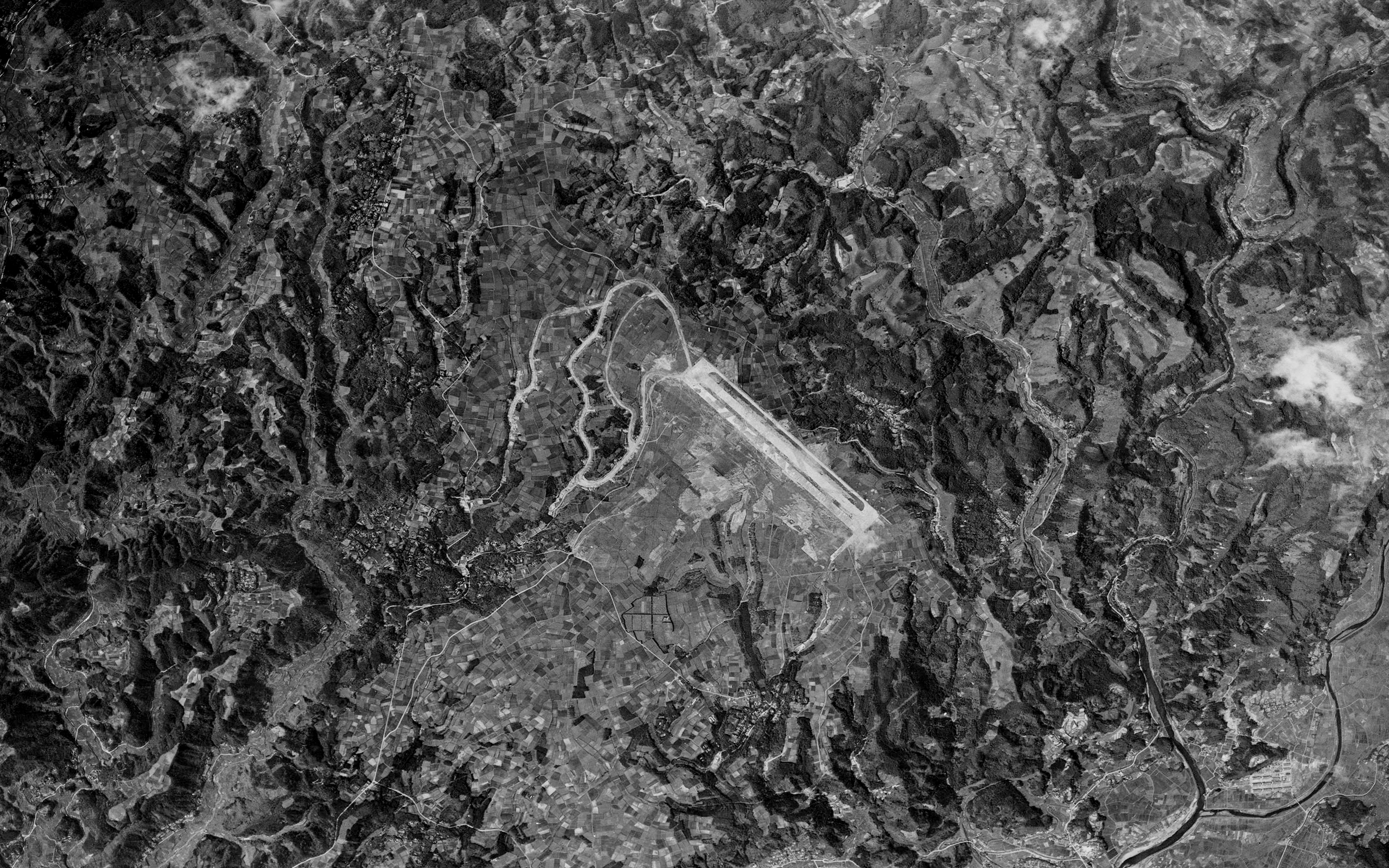

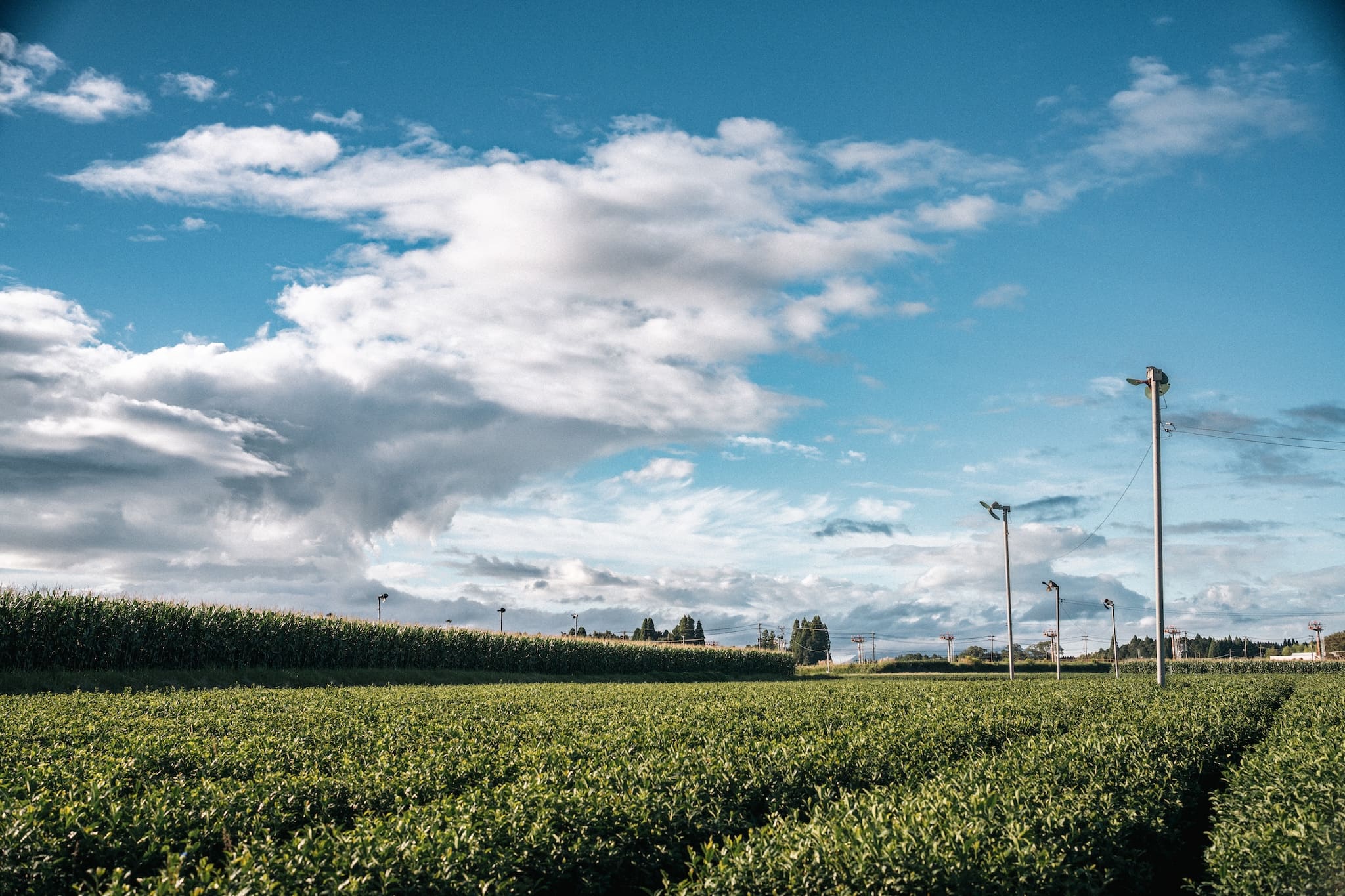
In a corner overlooking the runway of Kagoshima Airport, a tea field stands quietly.
Here the zairai — seed-grown, native — stock of Yamatomidori, from which Imamura Tea Plantation began, is still quietly alive after eighty years.
It was planted just as the war ended and this plateau was slowly returning to ordinary life. On ground from which Special Attack aircraft had taken off only the year before, one woman planted tea. The time of Imamura Tea Plantation begins there.
Before named cultivars such as Yabukita became the norm, Japan’s tea fields began with stock like this. Unlike cultivars propagated from cuttings, which are uniform, seed-grown native tea differs from plant to plant. The timing of the first buds, the shape of the leaves, the taste — each a little different. These uneven plants are the starting point of three generations of tea making.
A tea field that simply goes on being there, taking the same wind. Today, too, its leaves stir, as if to whisper softly, “welcome home.”
References & Sources
Japanese Official Records
- War Diary of the 701st Naval Air Group, incl. annex: War Diary of the Kokubu No. 2 Detachment (National Institute for Defense Studies, Ministry of Defense / Japan Center for Asian Historical Records, Ref. C13120358900)
- Operational Records of the Ten Air Unit, Fifth Air Fleet, Feb.–Aug. 1945 (ibid., Ref. C16120705300)
- Combat Reports of Fighter Squadrons 302 & 303, "Air Defense of the Kanoya Area," 18–20 March 1945 (ibid., Ref. C13120282500)
- Status Tables of Naval Air Bases, Homeland Section: Sasebo Naval District (National Institute for Defense Studies)
Japanese Publications
- Tokkotai Commemoration Peace Memorial Association (ed.), The Complete History of the Special Attack Corps (2008; supplement 2011) and the Special Attack Corps Roster of the Fallen
- Iwamoto, Kiyoshi & Mukai, Tsutomu (eds.), Requiem: Ride the White Clouds Home — A Record of Kokubu No. 2 Special Attack Base (Jūsantsukabaru Special Attack Memorial Preservation Committee / Mizobe Town, 1992)
- War History Series (Senshi Sōsho): Naval Operations in the Okinawa Area (War History Office, National Defense College, Asagumo Shimbunsha, 1968)
U.S. Official Records
- CINCPAC-CINCPOA Bulletin No. 166-45, "Airfields in Kyushu" (U.S. Pacific Fleet and Pacific Ocean Areas, 15 August 1945) — public domain
- Air Facilities Supplement to JANIS 84 (Southwest Japan) (Joint Army-Navy Intelligence Study, compiled 1 May 1945) — public domain
- CINCPAC-CINCPOA Special Translation No. 65, "Digest of Japanese Air Bases" (12 May 1945 / National Diet Library Digital Collections) — public domain
- XXI Bomber Command Tactical Mission Reports, incl. Mission No. 104 (National Diet Library Digital Collections) — public domain
- U.S. Army Air Forces reconnaissance photograph, Sortie 5ME-1 (taken 1 January 1945; JICPOA annotated print, ref. 50203-46 / original negative: U.S. National Archives, Record Group 373) — public domain
Local Sources (Kirishima City, Kagoshima)
- Inscription and dedication of the Jūsantsukabaru Special Attack Corps Memorial (Uwatoko Park, erected 1979)
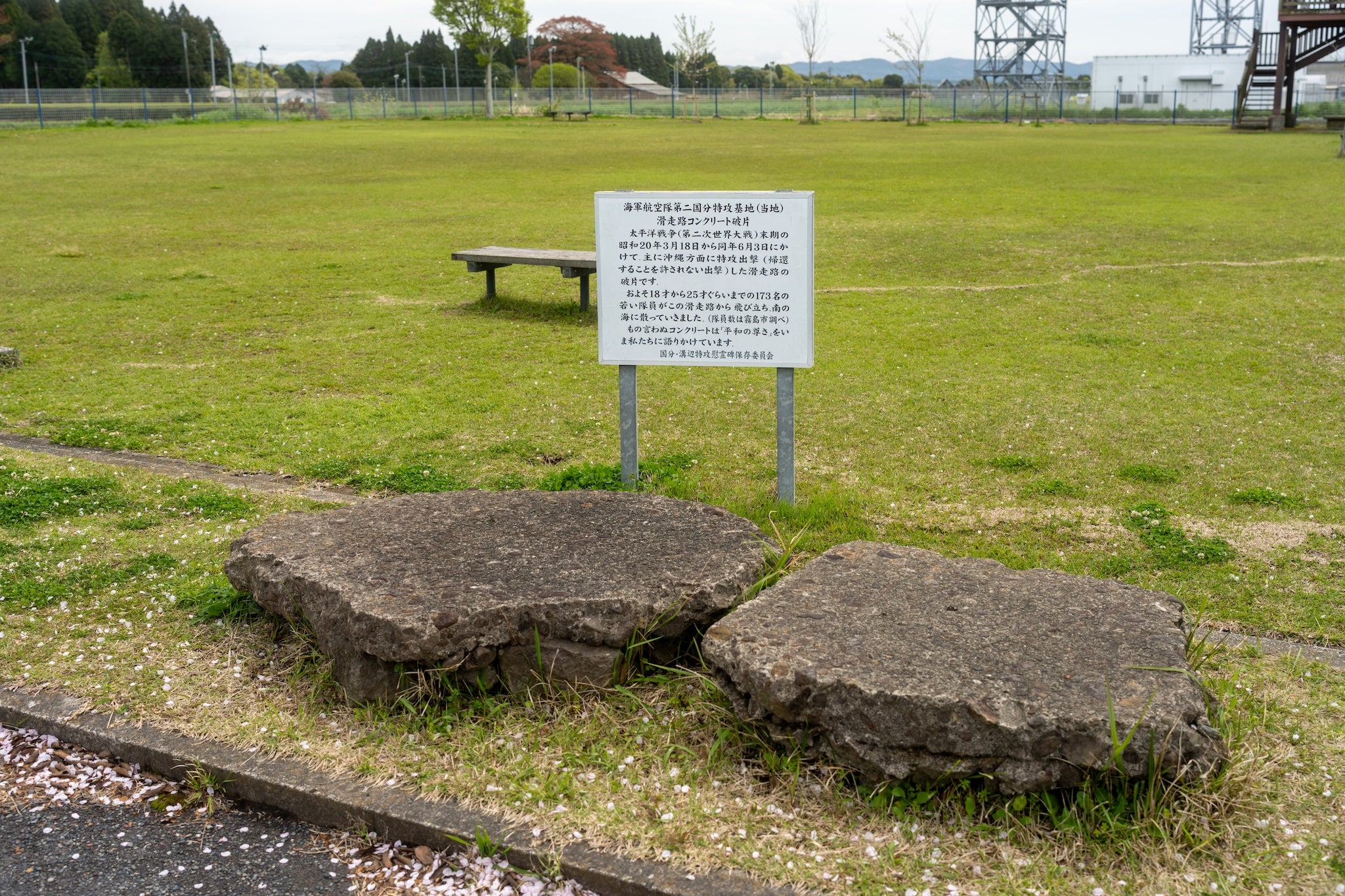
- Information board, Runway Concrete Fragments (Airport Park, 651-10 Kareigawa, Hayato-chō; Kokubu-Mizobe Special Attack Memorial Preservation Committee) — the figure of 173 fallen is per Kirishima City research
- Memorial information board (Uwatoko Park, 1997, Mizobe Town Special Attack Memorial Preservation Committee)
- On-site guide map, "Special Attack Base: Kokubu No. 2"
Images
- U.S. military aerial photograph USA-M57-261 (19 April 1946, 1st Reconnaissance Squadron, Eighth Air Force): adapted from the Geospatial Information Authority of Japan (GSI) Map & Aerial Photo Viewing Service
- Present-day aerial imagery: adapted from the Geospatial Information Authority of Japan (GSI) aerial photographs.
Film
- "Japanese Pilots; Dive Bombers; Aerials of Dive Bombers in Flight" (1943, captured Japanese footage): U.S. National Archives, via Internet Archive — public domain
- U.S. Navy footage, March–April 1945, waters off Kyushu and Okinawa (Naval Photographic Center collection, NPC-11125 / 11173 / 11213 / 11164 et al.): U.S. National Archives, via Internet Archive — public domain
About This Project
Company
IMAMURA TEA PLANTATION
Founded 1947
Address
655-15 Karegawa, Hayato-cho, Kirishima-shi, Kagoshima 899-5113 Japan
Contact Information
Tel 0995-43-9162
Fax 0995-43-9260
Hours of Operation
10:00 – 17:00
Closed on Sundays and National Holidays
Tea Master:Hirotsugu Imamura
When I face the craft of tea, I always hold on to a sense of “freedom.”I listen to the voice of nature, break away from fixed forms, and quietly explore the possibilities within each cup.
Producer:Yoshihiro Shimazu
Tea takes me places I never expected—beyond landscapes, beyond time, and sometimes even beyond myself.It keeps leading me forward, and I keep following.
Branding:I.T.P.entertainment
We deliver emotion through stories and tea, crafting moments that stay with you.
Certifications & Qualifications
Organic JAS Certified Producer (Agricultural Products) — Certification No. 1097
Organic JAS Certified Processor (Processed Foods) — Certification No. 1108 (Processed)
ASIAGAP Certification Number: MIC-S-A460000095
PRESENTED BY
IMAMURA TEA PLANTATION
© all rights reserved