What Defines Matcha?

Matcha is not defined by a specific piece of equipment.

It is created through a sequence of processes: shade cultivation, steaming, drying without rolling, and consumption in the form of a fine powder. Through the accumulation of these steps, matcha comes into existence.

This concept is also organized in ISO/TR 21380:2022, which defines matcha not by machinery but by its processes and characteristics. Traditional tencha furnaces and stone mills are representative methods that have historically produced this quality. While respecting that tradition, we choose contemporary methods based on the essential principles of the process.

More Freedom for Tea hybrid MATCHA

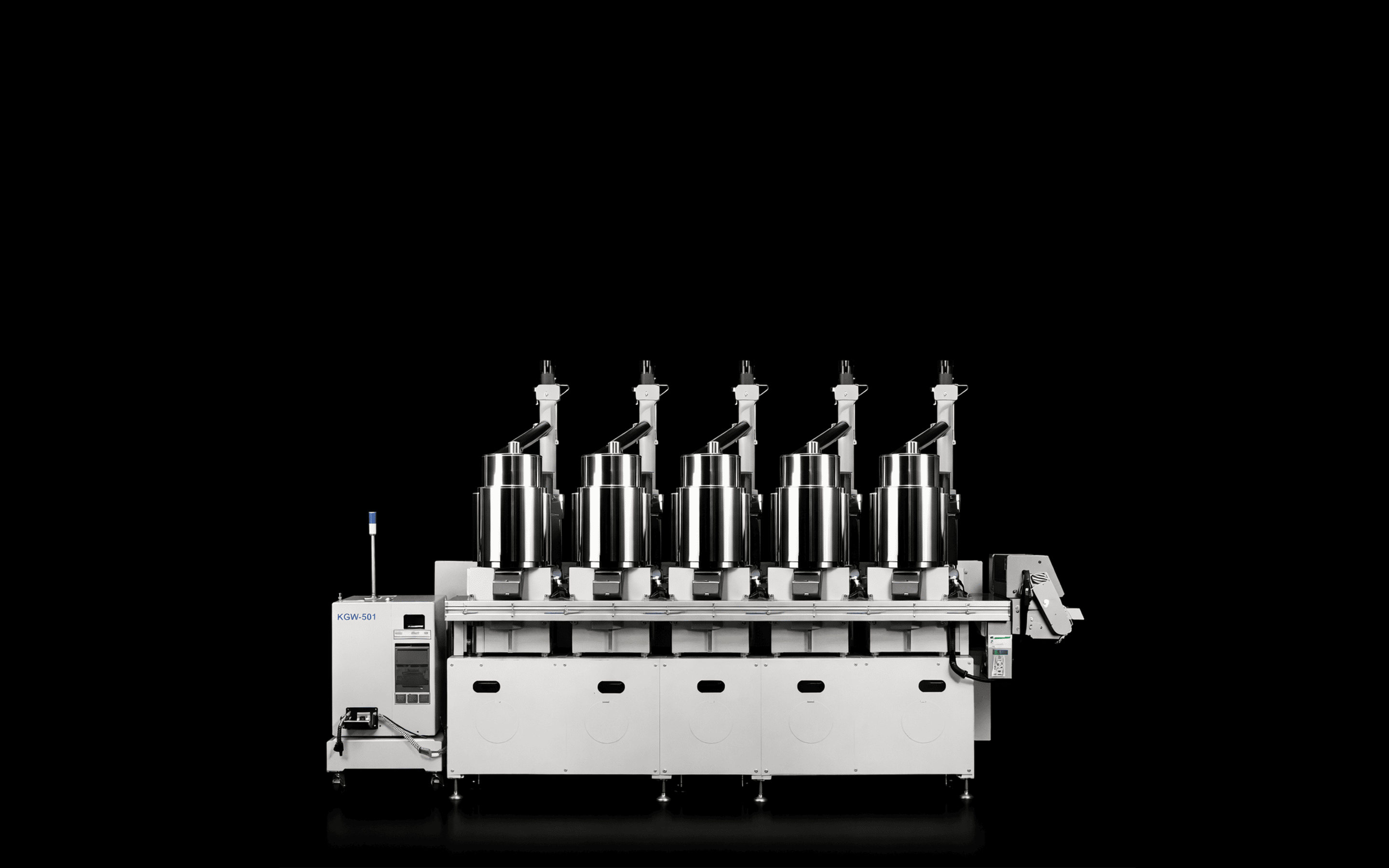
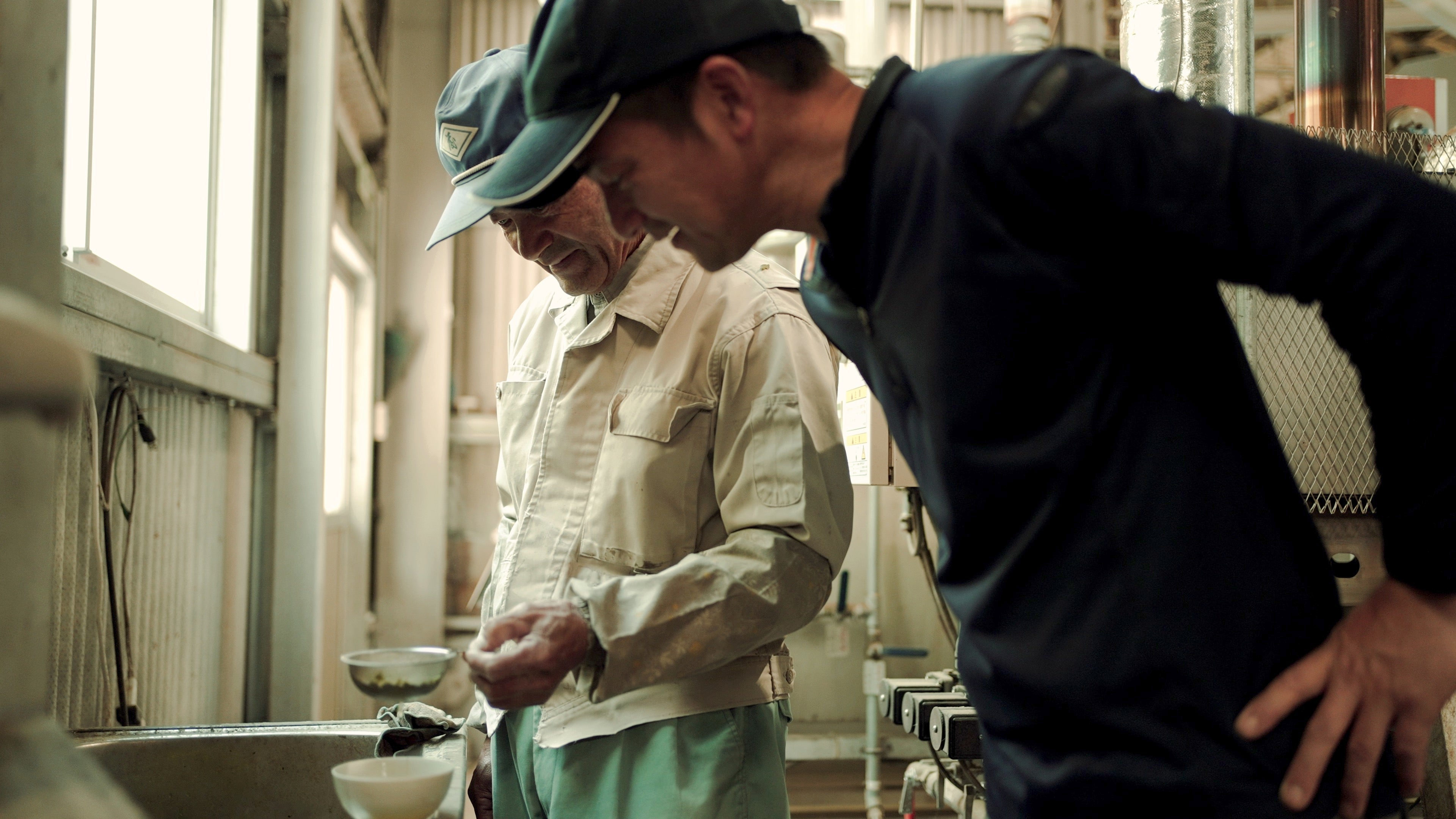
Traditional stone mills have supported the beauty and flavor of matcha throughout a long history.
The slow grinding process is a highly refined method, designed to draw out its aroma and umami.

While inheriting this philosophy, we pursued a method that delivers the same quality with greater stability and consistency.
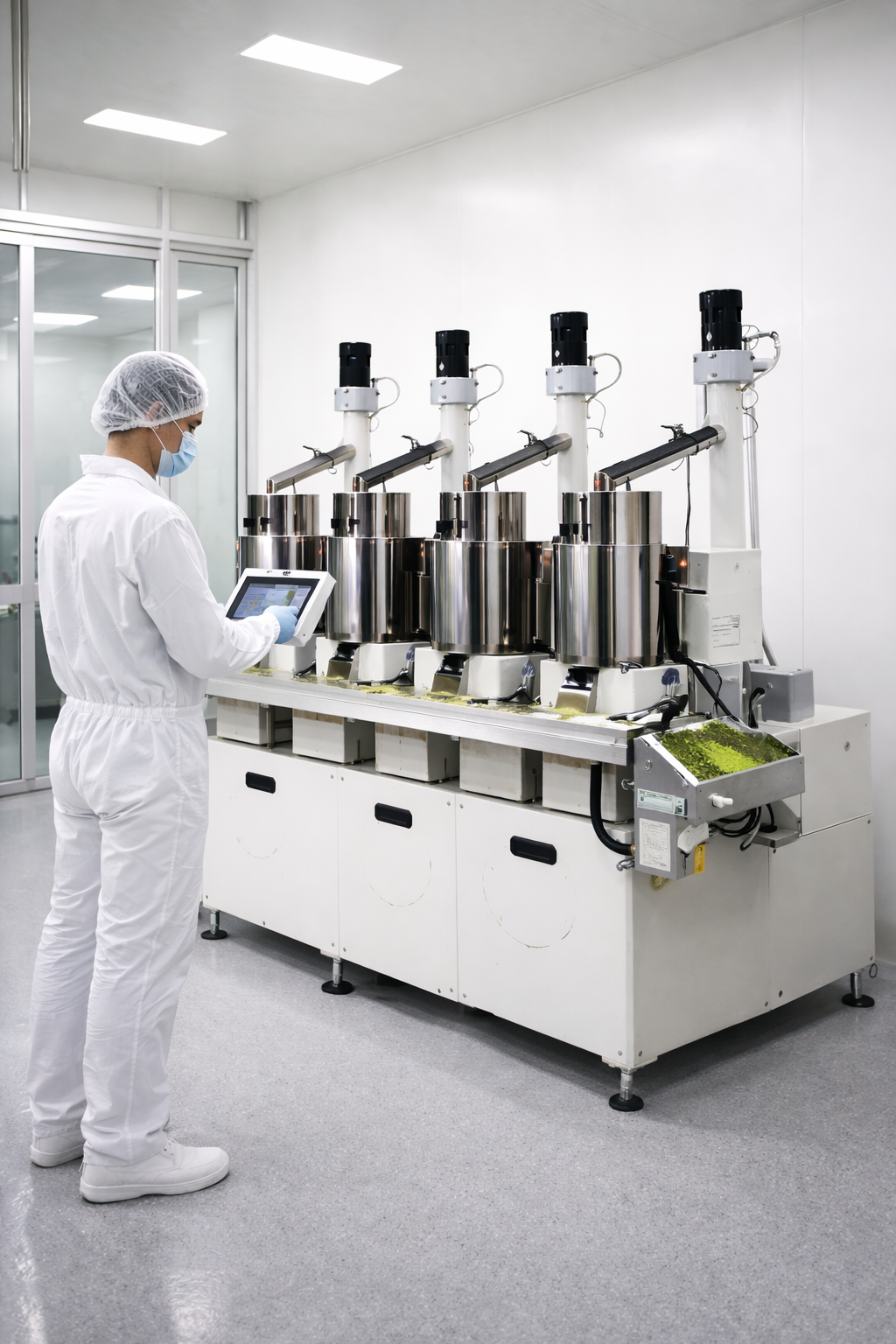
Ductile iron is used for the mill material to suppress changes in grinding performance. In addition, a water-cooled milling mechanism controls temperature during continuous operation, preserving the natural aroma and umami of matcha

The Choice of First Harvest

The young buds that emerge in spring contain nutrients stored throughout the winter. Their leaves are tender, carrying a delicate aroma and a clear, refined umami. Tea leaves from this brief season make it easier to express the vivid green color and smooth texture expected of matcha.

For that reason, matcha production is concentrated into a single moment in spring.

Only once a year.

That short window ultimately shapes the character of the matcha.

What Spring Buds Bring

The young buds that emerge in spring contain nutrients stored throughout the winter. Their leaves are tender, carrying a delicate aroma and a clear, refined umami. Tea leaves from this brief season make it easier to express the vivid green color and smooth texture expected of matcha.

For that reason, matcha production is concentrated into a single moment in spring.

Only once a year.

That short window ultimately shapes the character of the matcha.

Process

Cultivation

Building the Foundation of Aroma and Umami

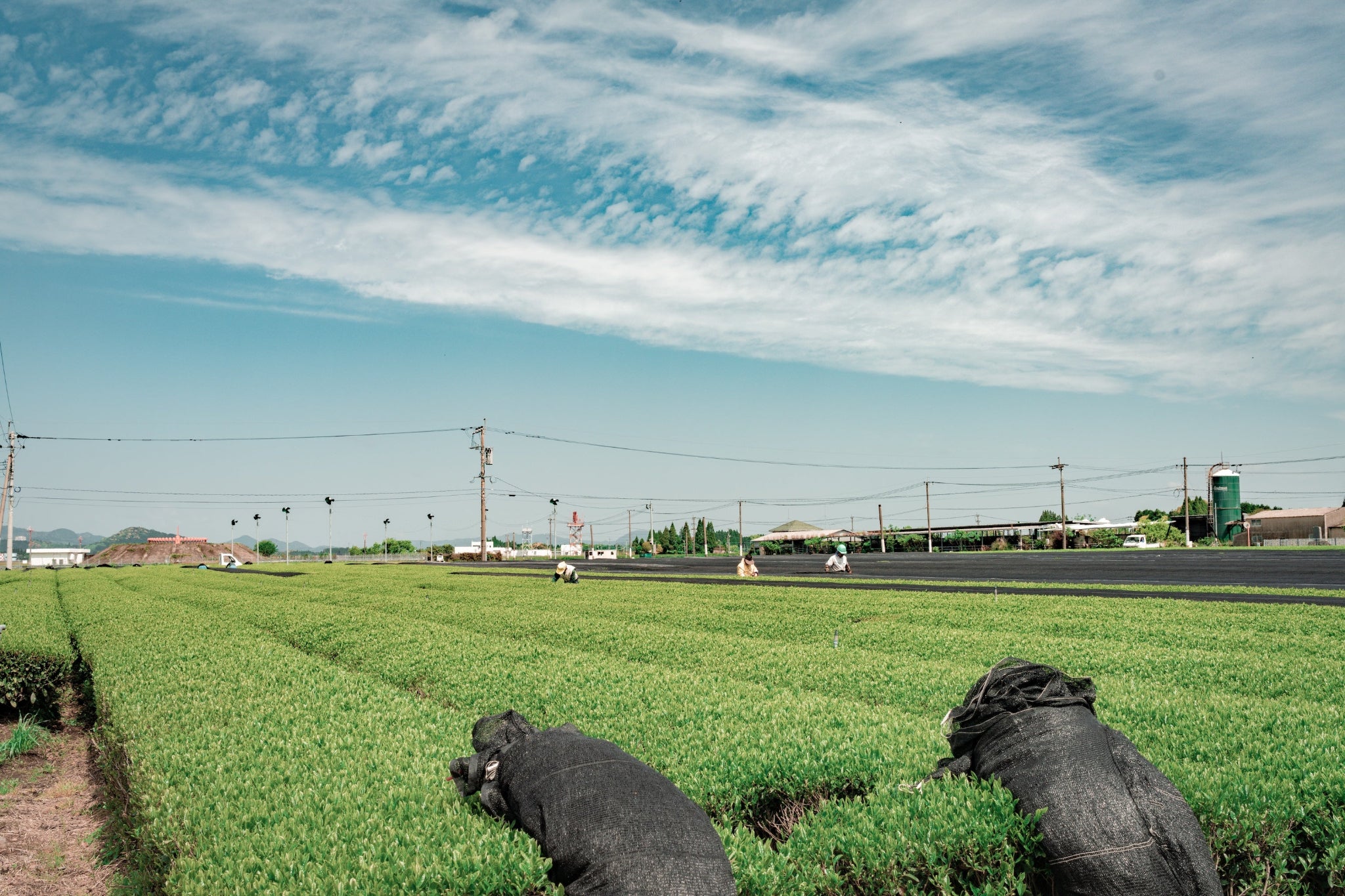
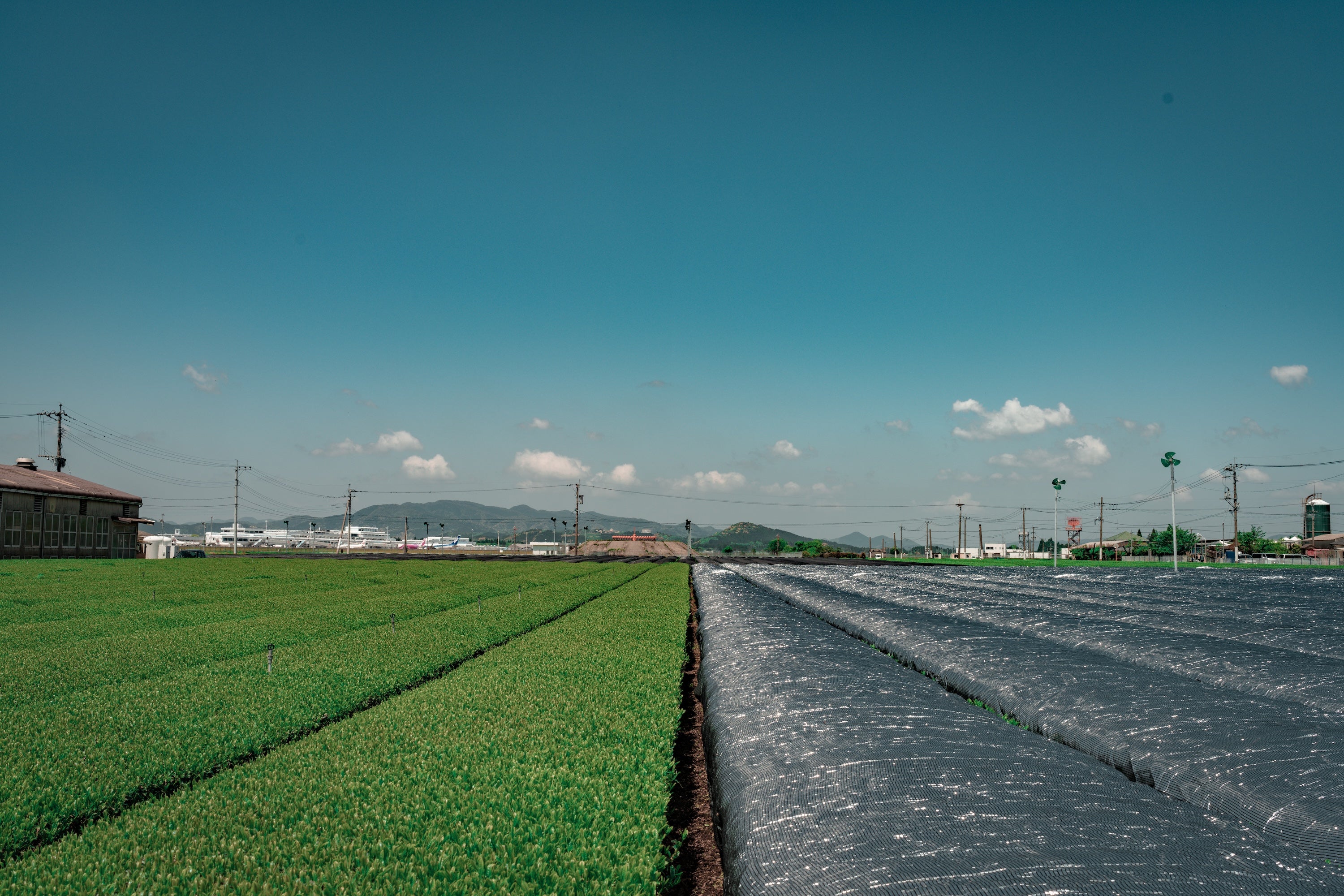
Tea leaves for matcha are grown under shade cultivation. Typically, the tea fields are covered for more than 20 days before harvest to reduce direct sunlight. By limiting photosynthesis through shading, the leaves develop a deeper green color and accumulate higher levels of chlorophyll and L-theanine.

This process forms the basis of matcha’s vivid color, its soft and lasting umami, and its gentle aroma. In many ways, the quality of matcha is already largely determined at the cultivation stage.

Processing

Preserving the Character of the Leaf

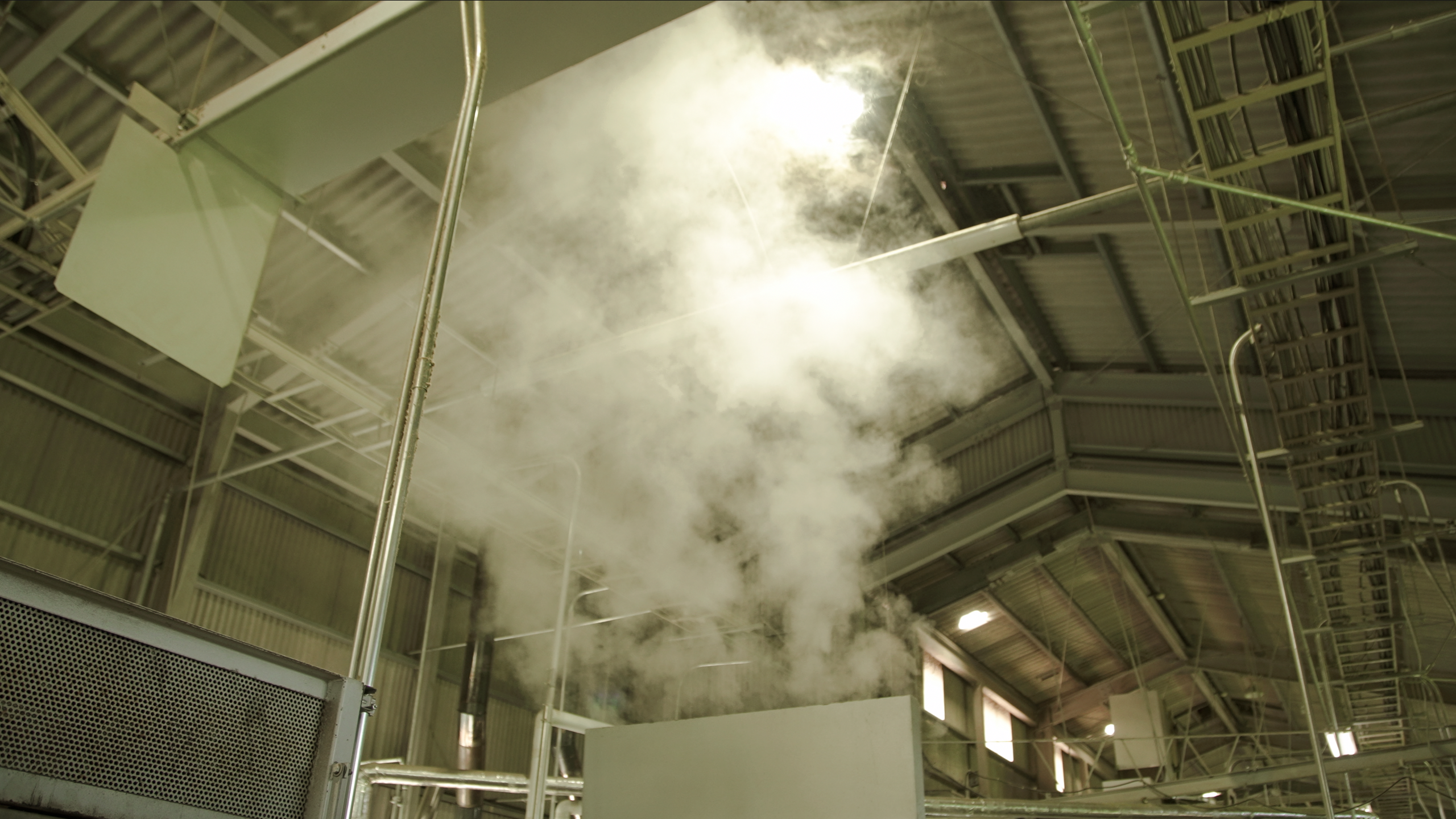
The harvested tea leaves are promptly subjected to steaming. The steaming process typically lasts about 15–30 seconds and is intended to stop enzymatic activity and prevent oxidation.

After steaming, unlike sencha, the leaves are not rolled. Instead, they are dried while maintaining their natural shape. During the drying process, temperature and airflow are carefully controlled so that moisture is gradually removed from within the leaves without compromising their color or aroma.

Through this process, the dried leaves reach a state equivalent to tencha, the raw material used for producing matcha.

Roasting

Stabilizing Quality and Aroma

This stage draws on roasting techniques developed through sencha production. By carefully adjusting the internal moisture of the leaves, the process reduces grassy notes and variations while preparing the material for grinding.

Through gentle heating, a softer and more dimensional aroma—rarely found in conventional matcha—can be expressed. Alongside its fresh green character, subtle nutty notes also emerge. This step represents a convergence of two tea-making philosophies, sencha and matcha, and serves as a process designed to stabilize both the quality and flavor profile of the matcha.

Grinding

Completing the Matcha

After roasting has prepared the leaves for their final state as matcha, they are ground into a fine powder with an average particle size of approximately 10–30 µm.

The most critical factor in the grinding process is temperature control. A rise in temperature caused by friction can lead to deterioration in color, aroma, and umami. For this reason, it is generally considered desirable to keep the leaf temperature below about 40°C during grinding.

When both particle size and temperature are properly controlled, the powder achieves a smooth texture and clean mouthfeel, allowing the true character of matcha to emerge.

The only thing that becomes faster is the process.

With the introduction of water-cooled mills, matcha production at Imamura Tea Plantation has become significantly faster than before.
While a traditional stone mill produces about 20–40 g per hour, a water-cooled mill can produce approximately 3 kg per hour.

Process Speed
Traditional Stone Mill 40 g / hour
Water-Cooled Mill 3 kg / hour
Traditional stone mill: 40 g/hour • Water-cooled mill: 3 kg/hour

The quality remains the same as always.

By controlling the temperature during the grinding process, we preserve the aroma, color, and umami of the matcha, while achieving stable production at approximately 75 to 150 times the speed of traditional methods.

Quality
Aroma retained
Color retained
Umami retained
No change in quality
Production Speed
Traditional method
Water-cooled grinding 75×
Stable production while preserving matcha quality.

3kg/h

Production capacity of one water-cooled mill

75×

Compared with a traditional stone mill

18Kg/h

Our total production capacity

20t

Maximum annual production

A Presence That Doesn’t Disappear

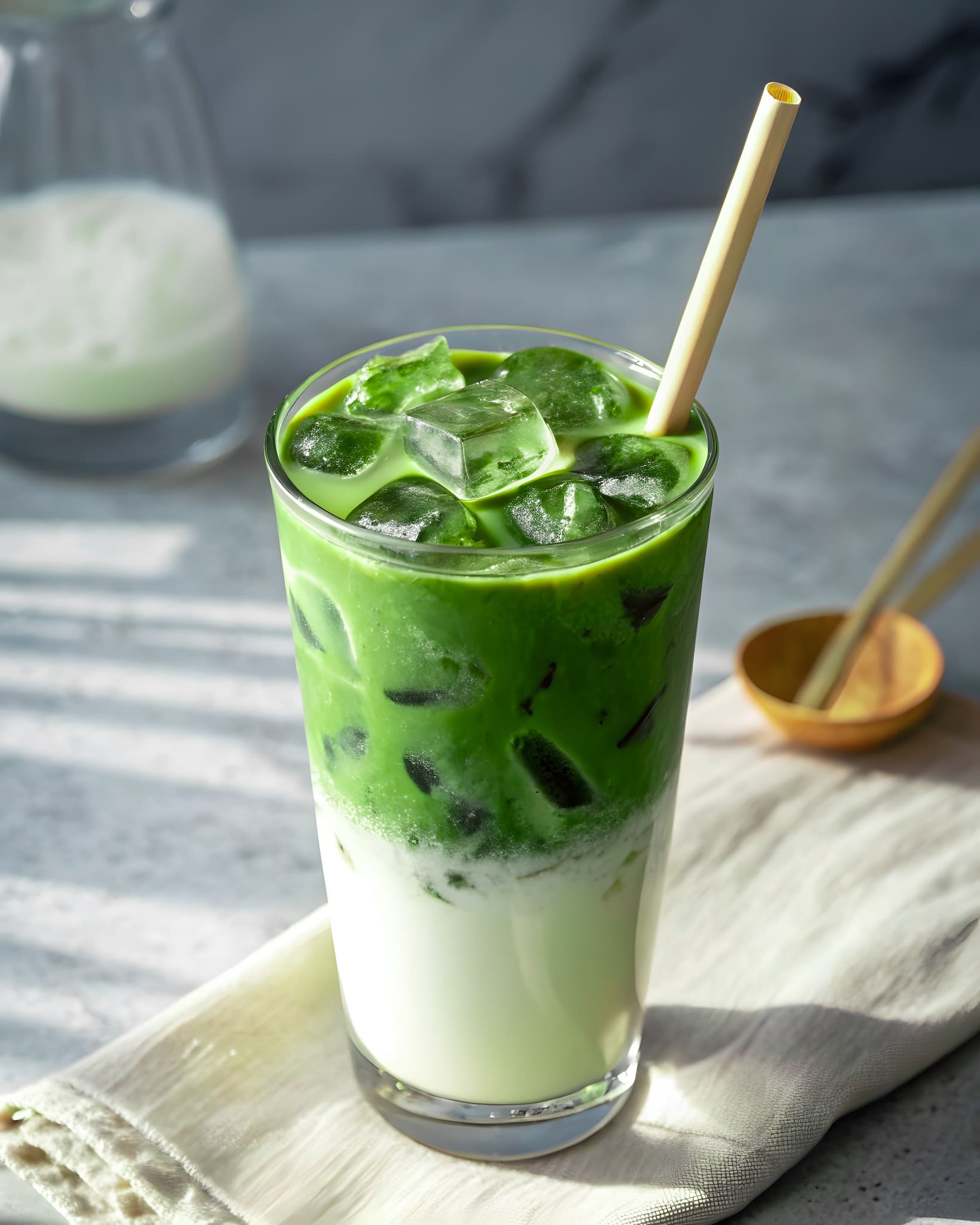
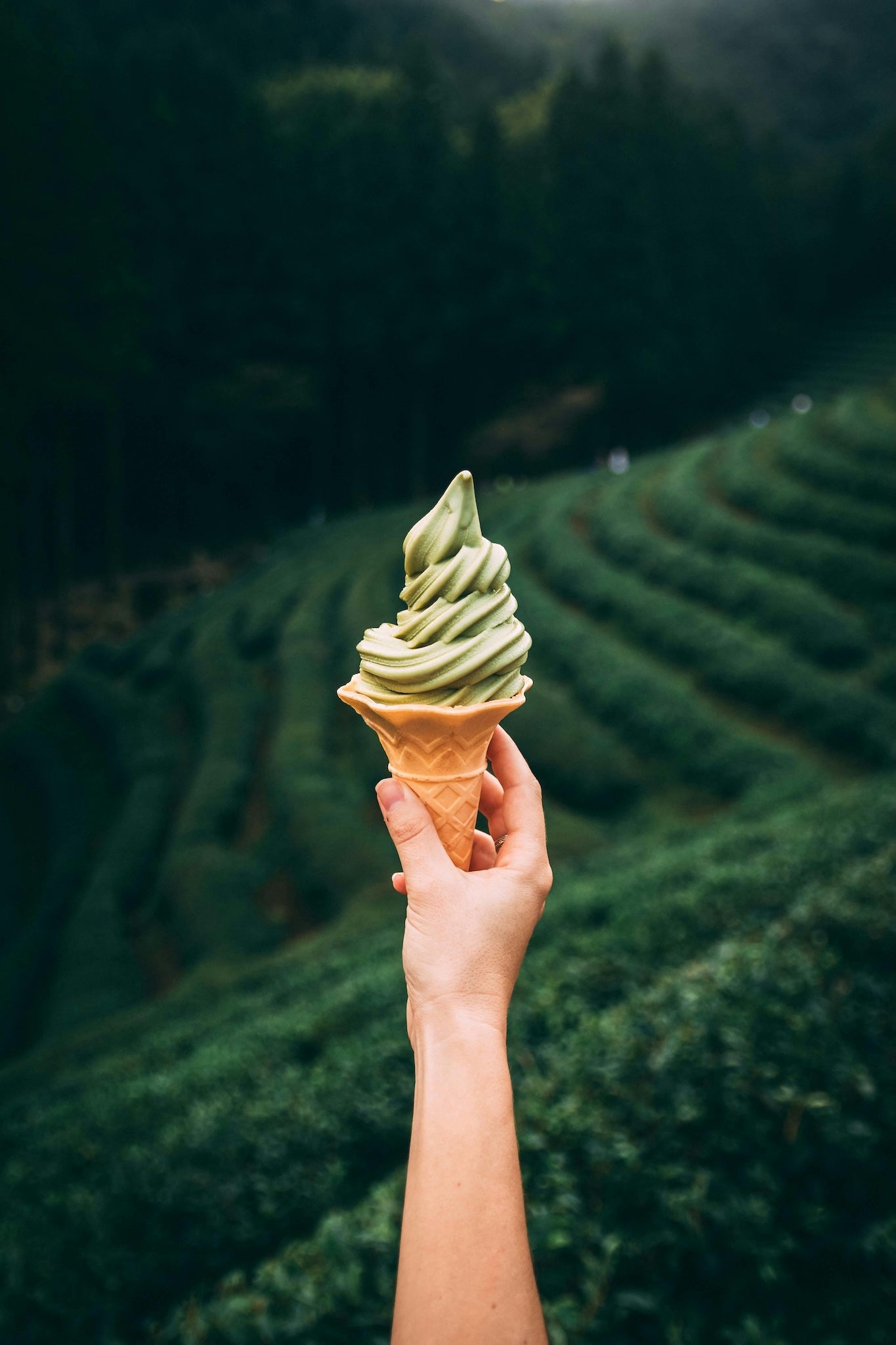
Traditional matcha is delicate and beautifully refined. Yet when combined with milk or sugar, its character can sometimes fade quietly into the background.

Hybrid Matcha from Imamura Tea Plantation was designed for such uses.

A toasty, nutty aroma that holds its presence—even in lattes and desserts.

Highlights


In 2024, Kagoshima Prefecture produced approximately 27,000 tonnes of aracha — unrefined tea — claiming the top position in Japan for the first time since records began in 1959. For decades, that place had belonged to Shizuoka. In 2025, production exceeded 30,000 tonnes, holding the top rank for a second consecutive year.

200,300

Plantation’s total field area

1st

Kagoshima’s rank

30,000t

Kagoshima’s raw tea output

44%

Third harvest production

This achievement was not made by Kagoshima alone. It stands on the accumulated knowledge and craft of tea producers across Japan — generations of growers who shaped what tea-making in this country has become.

At Imamura Tea Plantation, we tend to each leaf with the same care that this land and its history demand. Rooted in Kagoshima's nature and the tea culture passed down through time, we continue — quietly, steadily — moving toward the next era of what this place can become.

CERTIFICATIONS

認証

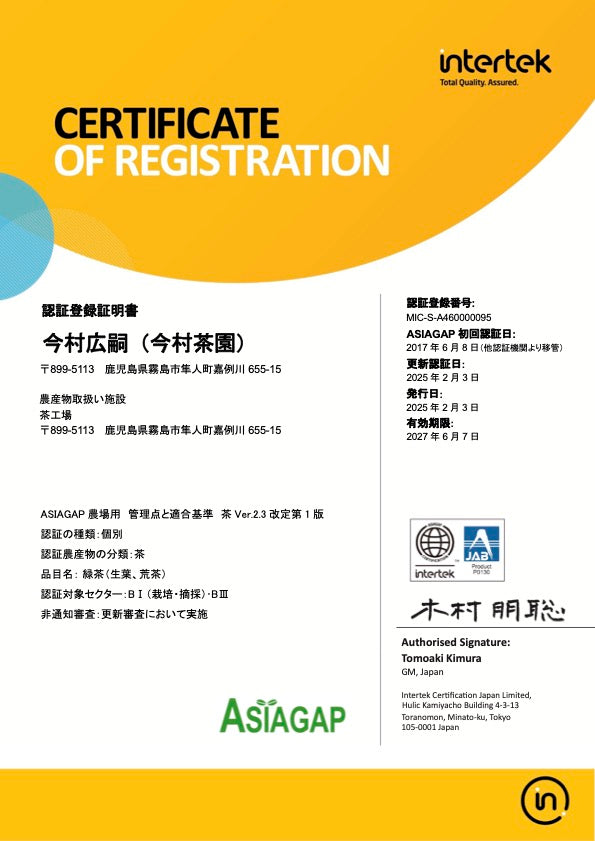
Imamura Tea Plantation holds both ASIAGAP and Organic JAS certification.
Each represents an independent, third-party recognition of our commitment to responsible farm management, environmental care, and consistent quality.
To honor the nature of Kirishima — and to deliver a cup you can trust. Certification is one form that promise takes.

ASIA GAP

CERTIFICATE OF REGISTRATION
Certification Number: MIC-S-A60000095

  • Standard
    Farm Management and Compliance Standard for Tea, Version 2.3 (Revised Version 1)
  • Certification Type
    Individual Certification
  • Product Category
    Tea
  • Products
    Green Tea (Raw Leaves, Unrefined Tea)
  • Certified Scope
    BI (Cultivation and Harvesting)
    BIII (Processing)
Organic Agricultural Product Process Manager

Certification Number: 1097

  • Type of Agricultural Products Subject to Certification
    Organic Agricultural Products
  • Legal Basis for Certification
    Act on Japanese Agricultural Standards (Act No. 175 of 1950)
  • JAS Standards for Certification
    Japanese Agricultural Standards for Organic Agricultural Products
  • Technical Standards for Certification
    Technical Standards for Certification of Organic Agricultural Products and Organic Feed (limited to those that have introduced processes such as sorting or selection only) for Production Process Managers and Overseas Production Process Managers
Organic Processed Food Production Process Manager


Certification Number: Processing 1108

  • Type of Agricultural Products Certified
    Organic Processed Foods
  • Legal Basis for Certification
    Act on Japanese Agricultural Standards (Act No. 175 of 1950)
  • JAS Standards for Certification
    Japanese Agricultural Standards for Organic Processed Foods
  • Technical Standards for Certification
    Technical Standards for Certification of Organic Processed Foods and Organic Feed (limited to those that have introduced processes such as sorting or selection only) for Production Process Managers and Overseas Production Process Managers

ASIAGAP is a farm management certification program approved by the GFSI (Global Food Safety Initiative) — the internationally recognized body supported by the world's leading food companies and retailers.

Certification confirms that Imamura Tea Plantation meets rigorous standards across food safety, environmental management, worker safety, human rights, and farm operations — all verified by an independent third-party auditor.

For importers, ASIAGAP certification provides documented assurance of responsible agricultural practice, supporting compliance with international food safety requirements at the point of customs clearance.

Organic JAS is Japan's national certification for organic agricultural products, administered by the Ministry of Agriculture, Forestry and Fisheries. It certifies that our tea is produced without the use of synthetic pesticides or chemical fertilizers, under strict and independently verified standards.

Critically for international buyers: Japan's Organic JAS certification holds mutual equivalence recognition with the USDA National Organic Program (NOP). Products certified under Organic JAS may be sold as organic in the United States without requiring separate USDA certification. Equivalence has also been recognized with EU organic standards.

For importers, this means reduced certification barriers and a clearer path to market — backed by one of the most stringent organic standards in Asia.

Brand concept


Our concept, "I want the afterglow of Kirishima to linger on."
comes from a simple wish.

The memories you carry from visiting Kirishima—
the wind of Kagoshima, the warmth of its people,
the feeling of being welcomed by a gentle hometown.

Moments when you think of your family,
your loved ones,
or someone you wish to reach out to.

In those quiet, nostalgic moments,
we hope that a cup of Imamura Tea
will let you feel that afterglow once again.

We are committed to sharing the beauty of Kirishima tea
and the richness of its natural landscape
with people all around the world.

Like the resonance after a bell is struck,
the sound fades, but something still lingers in the air.
We call that yoin — the afterglow.

About This Project

Company

IMAMURA TEA PLANTATION LLC.
Established 1970

Address

655-15 Karegawa, Hayato-cho, Kirishima-shi, Kagoshima 899-5113 Japan

Contact Information

Tel 0995-43-9162
Fax 0995-43-9260

Hours of Operation

10:00 – 17:00
Closed on Sundays and National Holidays

Tea Master:Hirotsugu Imamura

When I face the craft of tea, I always hold on to a sense of “freedom.”I listen to the voice of nature, break away from fixed forms, and quietly explore the possibilities within each cup.

Producer:Yoshihiro Shimazu

Tea takes me places I never expected—beyond landscapes, beyond time, and sometimes even beyond myself.It keeps leading me forward, and I keep following.

Branding:I.T.P.entertainment

We deliver emotion through stories and tea, crafting moments that stay with you.

Certifications & Qualifications

有機JAS農産物生産工程管理者 認証番号: 1097
有機JAS加工食品生産工程管理者 認証番号: 加工 1108
ASIAGAP 認証登録番号:MIC-S-A460000095

Imamura Tea Plantation – ASIAGAP Certified Farm, Reg.A460000095, Kirishima Kagoshima Japan
Imamura Tea Plantation – Organic JAS Certified by Kagoshima Organic Agriculture Association, Kirishima
Imamura Tea Plantation – Kagoshima Prefectural Tea Association Chairman's Award, Kirishima
Imamura Tea Plantation – Kyushu Agriculture Director's Award, Kagoshima Prefectural Tea Evaluation

PRESENTED BY

IMAMURA TEA PLANTATION

© all rights reserved

I want the afterglow of Kirishima to linger on.


Contact Us

We'd love to hear from you. Our team is here to help.

If you have any questions, please contact us using the inquiry form below.After completing the required fields, click“Send Message.”We are happy to assist you in English.

This site is protected by hCaptcha and the hCaptcha Privacy Policy and Terms of Service apply.