

Did you know that the same tea trees give teas of different character as the seasons turn? Spring shincha (the first flush), the second flush of summer, and the autumn-winter bancha picked as the year closes. In our Kirishima tea fields, the leaves change expression with every season, and that difference carries straight into the cup. Let us walk through our year, and the personality of each tea.
Shincha (First Flush): The Aroma of the Year's Beginning
Through the winter, the tea trees quietly store their nutrients. In April, they send everything at once into the new buds — this is the first flush. Because it is the first picking of the year, it is also called shincha, prized for its fresh, leafy aroma and its rich umami. In our fields, we shade the rows before harvest, softening the sunlight to restrain astringency and draw out umami. It is the most charged, expectant season of our year.
Second Flush: The Strength of the Summer Sun
After the first harvest, the trees push out buds again under the early-summer sun. Grown in full sunlight, the second flush carries more catechins — the source of astringency — giving a firm, substantial cup. It yields to the first flush in delicacy, but cold-brewed or iced, its briskness comes to the fore, a fine companion to summer meals. It is a robust, dependable everyday tea.
Autumn-Winter Bancha: A Calm Depth at the Season's End
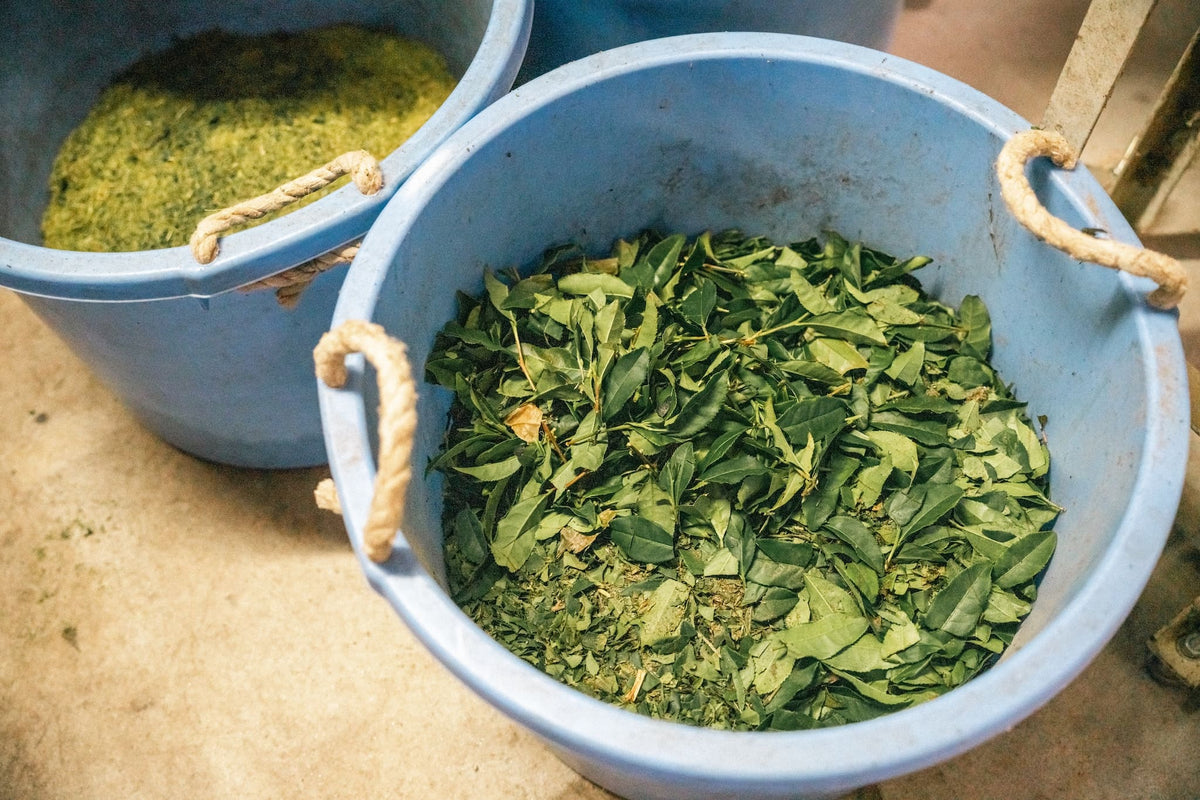
In autumn comes the last picking of the year: autumn-winter bancha. Leaves that have grown through the summer are larger and sturdier, and the taste is light and clean. Comparatively low in caffeine, it drinks easily with meals or at the end of the day. Roasted more deeply into hojicha, a calm depth emerges within the toastiness. It is not a showy tea, but one that keeps quiet company with daily life.
A Region That Makes Tea Through the Seasons
Warm Kagoshima has a long growing season, producing tea generously in summer and autumn as well as spring. Here at the foot of the Kirishima mountains, we too keep making tea through the year, reading the leaves' expression season by season.
To learn more about the tea of this region, see “What Is Kirishima Tea.” The flavors of each season await in our Kirishima tea lineup.
Frequently Asked Questions
Q. Are shincha and first-flush tea the same thing?
A. Yes. The year's first picking is the first flush (ichibancha), and when enjoyed as the season's new tea it is called shincha.
Q. Is bancha a lower-quality tea?
A. Not lower — different in role. The delicate aroma of the first flush, the easy generosity of bancha: choose by the moment, and each shows its worth.
Share:
Not a Single Leaf Wasted: Circular Farming in Our Kirishima Tea Fields