

In Conversation
A Cup of Kirishima Tea That Settles the Moments After the Meal
—— Imamura Tea Plantation × Unagi Kappo Evistei
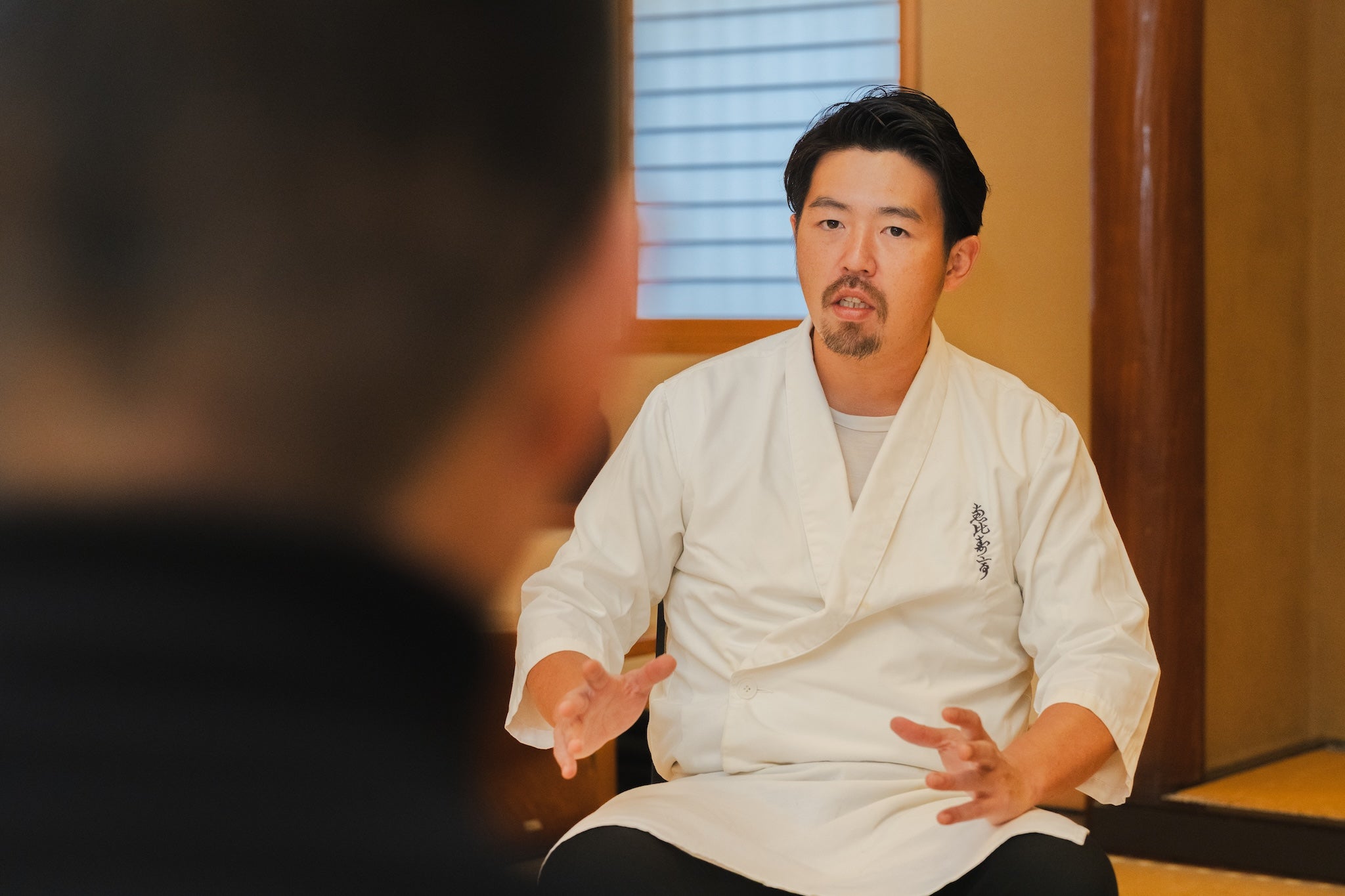
Hirotsugu Imamura (Imamura Tea Plantation) × Maaku Miyajima (Fourth-Generation Owner, Unagi Kappo Evistei)
⸻
Moderator (Shimazu)
Evistei, the unagi kappo restaurant now led by its fourth-generation owner, has newly begun serving Imamura Tea Plantation's Kirishima tea.
Today's conversation is moderated by Shimazu, who serves as producer for Imamura Tea Plantation.
Shimazu
Let us begin.
For four generations, Evistei has upheld its name — a restaurant centered on Japanese eel, discerning the finest ingredients of each moment, and cherishing the time families spend around the table.
Imamura Tea Plantation, meanwhile, has continued to make tea in dialogue with the nature of Kirishima, valuing depth and lingering resonance over flashiness.
This partnership is not simply a matter of introducing a new tea. What role does that cup play, served at the close of a meal? What feeling remains in the time between finishing the meal, leaving the restaurant, and arriving home?
"What does it mean to elevate a dish?" "What does it mean to think about dining as something that includes the time after the meal?" In facing these questions, Kirishima tea and Evistei came together quite naturally.
Today we ask: why Kirishima tea? What does that single cup mean in a place like Evistei? And what do these two hold dear in their daily work — what do they hope to hand on to the next generation? We would like to take our time putting the thinking behind it all into words.
With that, let's begin!!
How Kirishima Tea Came to Evistei's Tables

Miyajima
We've now begun serving Imamura Tea Plantation's Kirishima tea at Evistei — and honestly, when the idea first came to us, it felt like a very natural fit.
Imamura
I'm glad to hear you say that. For us, it was never about the prestige of being served at a renowned restaurant — what we thought about most was how to bring the lingering finish of the meal to a graceful close.

Miyajima
Unagi is a dish rich in both fat and umami. So the tea served at the end can't be too light, but it can't push itself forward either. Imamura Tea Plantation's tea had exactly that sense of distance.
Imamura
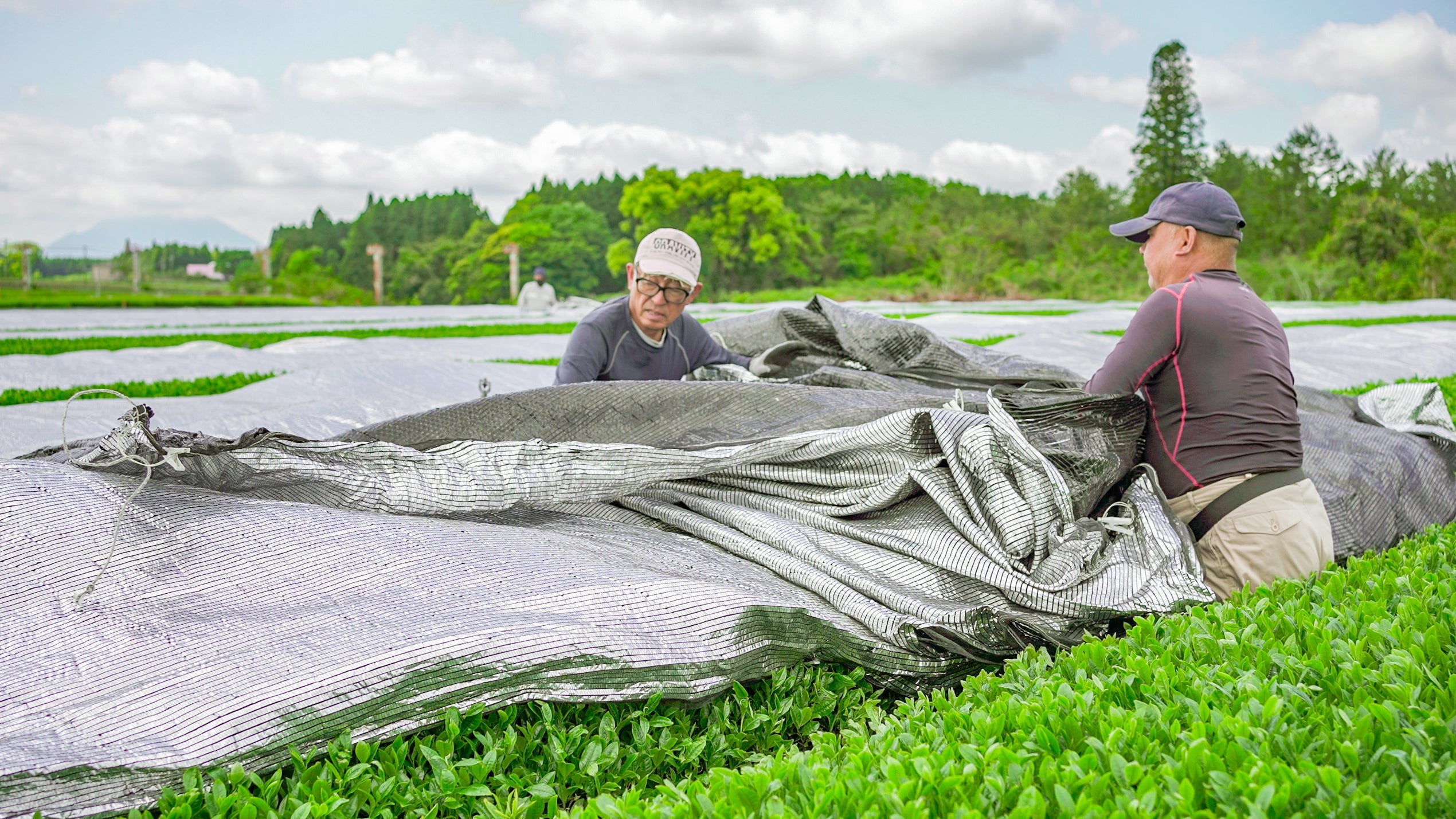
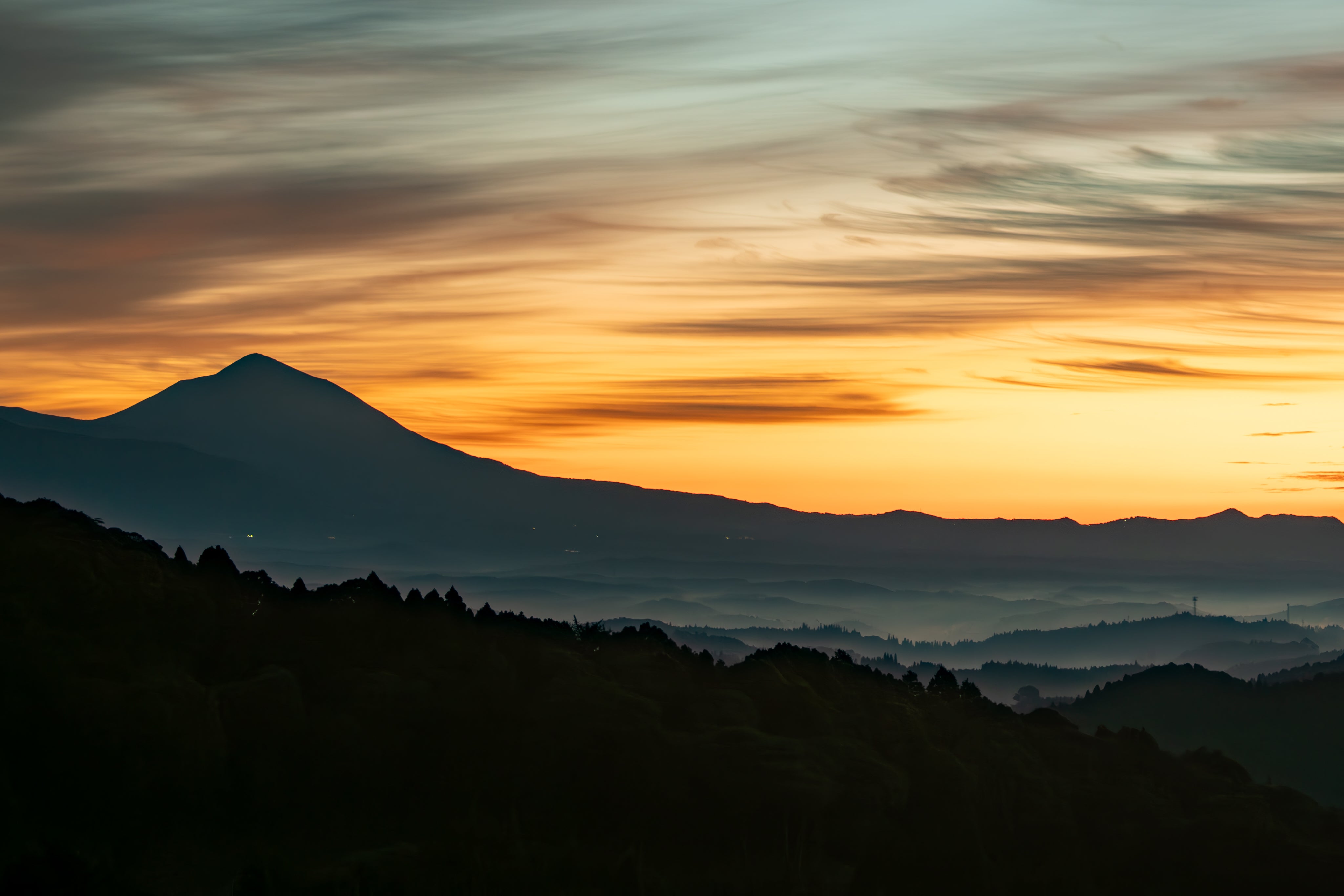
I think the land of Kirishima itself plays a large part. Volcanic ash soil, the swing between warm days and cold nights, the mist.
Rather than sharpening the aroma or the taste, it's an environment that tends to bring out a flavor of deep, overlapping layers.

⸻
What You Notice After the Last Sip
Miyajima
It was a tea where, after finishing the cup, you notice your mind has quietly settled.
Imamura
That may be the role we ask of tea above all else. Without intruding on the flavors and aromas of the meal, it brings that time to a beautiful close. We believe tea is not something that steps forward — it is a presence that stays gently beside you at the very end.
Miyajima
I've always felt that a meal isn't only what happens at the table — the time from leaving the restaurant until you arrive home is part of one single experience.

Imamura
Yes. The deliciousness of the moment you drink matters, of course, but what we truly cherish is the afterglow that follows the last sip. It stays with our guests as they leave the restaurant — setting the tone for the journey home.
Shimazu
"The afterglow of Kirishima, lingering on" — as we like to say. (laughs)
⸻
Tea Making Is a Craft of Waiting
—— Amid the Global Matcha Boom
Miyajima
Matcha is booming worldwide right now, isn't it?
Imamura
It is. Matcha is easy to understand overseas, and easy to appreciate. But sencha, the tea we devote ourselves to, is a somewhat quieter world — one with more depth, I think.

Imamura
From planting a tea bush to harvesting from it reliably takes at least five years.
Miyajima
Five years……

Imamura
The first few years aren't about shaping flavor — they're a time of waiting to see whether the plants will take root in this land. From there, year by year, we watch the weather and how the buds emerge, gradually learning to read the expressions of the field.
Miyajima
That's a timescale hard to imagine in the world of cooking.
Imamura
But without that slow accumulation, I don't believe that sense of the mind quietly settling could ever come to be.

⸻
A Father's Example, and the Roots of a Chef
Imamura
Miyajima-san, I hear you grew up watching your father cook, from the time you were small.
Miyajima
Yes. He was, above all, a cool father. On his days off, I remember riding on the back of his motorcycle, the wind in my face, as he took me to vintage clothing shops or out to the sea.

Miyajima
He was truly strict about his work — what you'd call a hard-driving man. Whether it was cooking or the way he lived, he was the type who never compromised.
Imamura
I see…… So that's why you give everything you have, every single day (laughs).
Shimazu
Almost too much energy, honestly…. (laughs)

Miyajima
It's imprinted in me at this point (laughs).
Miyajima
There was almost always music playing, at home and in the restaurant — my father loved soul music. In that atmosphere, I think I naturally absorbed his posture toward cooking, his sense of resolve.
Shimazu
Imamura Tea Plantation's films are built mainly around soul music — and in fact, it all began when you saw one of our films and sent us a DM, didn't it?
Miyajima
Yes — I thought, what is this film?! I DMed you on the spot (laughs)

⸻
Through Apprenticeship, to the Fourth Generation
Imamura
Was entering the culinary world a natural progression for you?

Miyajima
At first, I had no intention of taking over at all. But one day, my life changed completely. So after finishing school I entered the culinary world, knocking on the doors of Michelin-listed restaurants and training wherever they would have me.
Shimazu
Always at full throttle, as ever. (laughs)

Miyajima
It was a time when I was drilled thoroughly — not just in technique, but in how to face an ingredient, how to face a single plate.
Miyajima
And in 2020, I succeeded Evistei as its fourth-generation owner, which brings us to today.
⸻
What It Means to Share a Meal as a Family
Imamura
My impression is that a great many of Evistei's guests come to dine as families.

Miyajima
That's something we're quite intentional about.
Miyajima
I lost my father — the third-generation owner — when I was in junior high school.
Imamura
I didn't know that….

Miyajima
That is exactly why I understood, from an early age, just how precious the time a family spends together around the table really is.

Imamura
I see……
Miyajima
A meal isn't only about taste — it's about sharing the same time together.

Miyajima
Eating the same food, in the same space, passing the same hours. That memory later becomes something to look back on.
Imamura
That way of thinking overlaps with our tea making, too.
Imamura
Tea doesn't end at the table either. It stays with you — until you're home, or sometimes even into the next day.

Miyajima
That's why we want to build up, one by one, the kind of moments that make people think, "I'm glad we came here as a family."
⸻
Evistei's Commitments
—— Ingredients, the Source, and the Future
Imamura
One senses a strong commitment in how Evistei selects its ingredients as well.
Miyajima
For eel, we choose what we can truly stand behind at any given time — eel from Kyushu, as well as branded eels such as Mirai Unagi and Bando Taro.

Imamura
In recent years, the circumstances surrounding eel have been changing.
Miyajima
They have. With issues such as the Washington Convention (CITES) in play, I believe we live in an era that asks us to face eel itself, as an ingredient, with real honesty.
Miyajima
That's exactly why we choose ingredients whose background and philosophy we can see. Whenever possible, we also make a point of traveling to the source ourselves.
Miyajima
It's the same with sake and every other ingredient: we choose what elevates the food. At times we deliberately leave out anything that asserts itself too strongly.

⸻
A Shared Aesthetic
—— On Leaving an Afterglow
Imamura
Listening to you today, I feel that cooking and tea alike are crafts that never betray the time invested in them.
Miyajima
With eel, with any ingredient — in the end, it comes down to how the time was spent.

Imamura
We, too, place our faith in the strength of things grown slowly, rather than in quick results.

⸻
To the Next Generation
Miyajima
Taking what I received from my father and passing it on, in my own way — I see that as my role as the fourth generation.

Imamura
It's the same for us. Kirishima tea melting into the tables of Ageo, into the time families share — that is our highest ideal.
Miyajima
Eel and tea. Different in form, yet I feel we're facing the same direction.

Imamura
Yes. After the last sip, after the last bite, for someone to feel, "That was somehow just right." Nothing matters more than that.

In Closing
Shimazu
Through today's conversation,
what I felt once again was this:
the philosophy Imamura Tea Plantation holds dear —
"The afterglow of Kirishima, lingering on" —
and the wish Evistei has long protected —
"Ageo's smiles, here once again" —
overlap with one another with perfect naturalness.

When the meal is finished,
and the tea is drunk,
the mind is left a little more settled.
And that afterglow
carries you all the way home,
then turns into the quiet wish
to return to this place again.
The afterglow of Kirishima, carried on the smiles of Ageo.
A cup like that will go on,
quietly keeping company
with the tables of Evistei.
Thank you very much for today.
Yoshihiro Shimazu

■ About Unagi Kappo Evistei
Located in Ageo, Saitama Prefecture, Evistei is a long-established unagi kappo restaurant with a history of more than one hundred years, carrying the culture of the classic Japanese ryotei into the present day. With craftsmanship handed down from previous generations, the restaurant continues to protect its traditional flavors: Japanese eel carefully filleted and grilled to fragrant perfection with a secret tare sauce. Now under its fourth-generation owner, Evistei honors its heritage while thoughtfully adapting to the times, and has long been cherished as a place for celebrations, special gatherings, and community occasions. Guided by its brand concept, "Ageo's smiles, here once again," Evistei will continue to carry its flavors and spirit of hospitality into the future.

[Restaurant Information]
Address: 1-5-19 Kamicho, Ageo City, Saitama 362-0037, Japan
TEL: 048-771-0138
Hours:
• Lunch 11:00 – 14:30 (L.O. 14:00)
• Dinner 16:30 – 21:00 (L.O. 20:30)
Official website: https://www.evistei.com
Instagram: https://www.instagram.com/evisageo/


Share:
"Kirishima Tea" Now Served at Unagi Kappo Ebisutei
Looking Back on 2025.